SPRINGFIELD – Dozens of people cycled through the Springfield History Museum on Friday night during the town’s Second Friday Art Walk to check out the freshly arranged space and new exhibit.
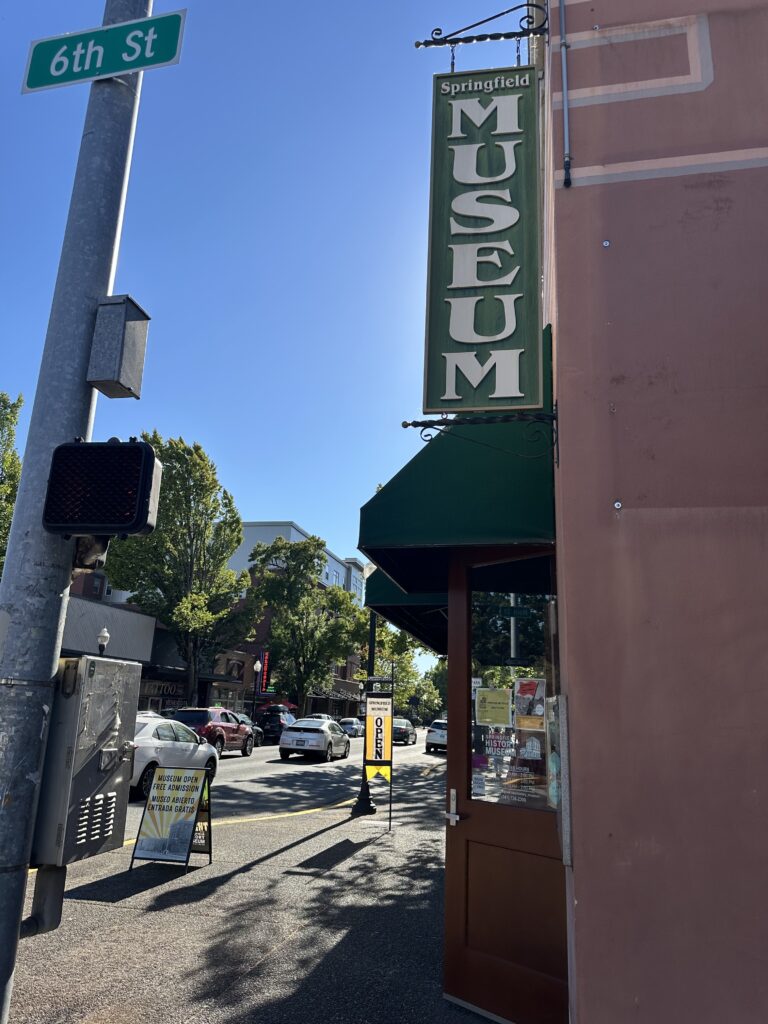
The museum has been closed for six months, and during the closure, more than 300 artifacts were researched, documented, photographed, and rehoused in archival-quality storage materials to help preserve Springfield’s history for future generations. Museum staff, volunteers, and interns from the University of Oregon helped with the preservation.
Thanks to support from community donors, Oregon Heritage, and the Fred W. Fields Fund of Oregon Community Foundation, the museum also completed significant renovations to the Kathy Jensen Gallery.
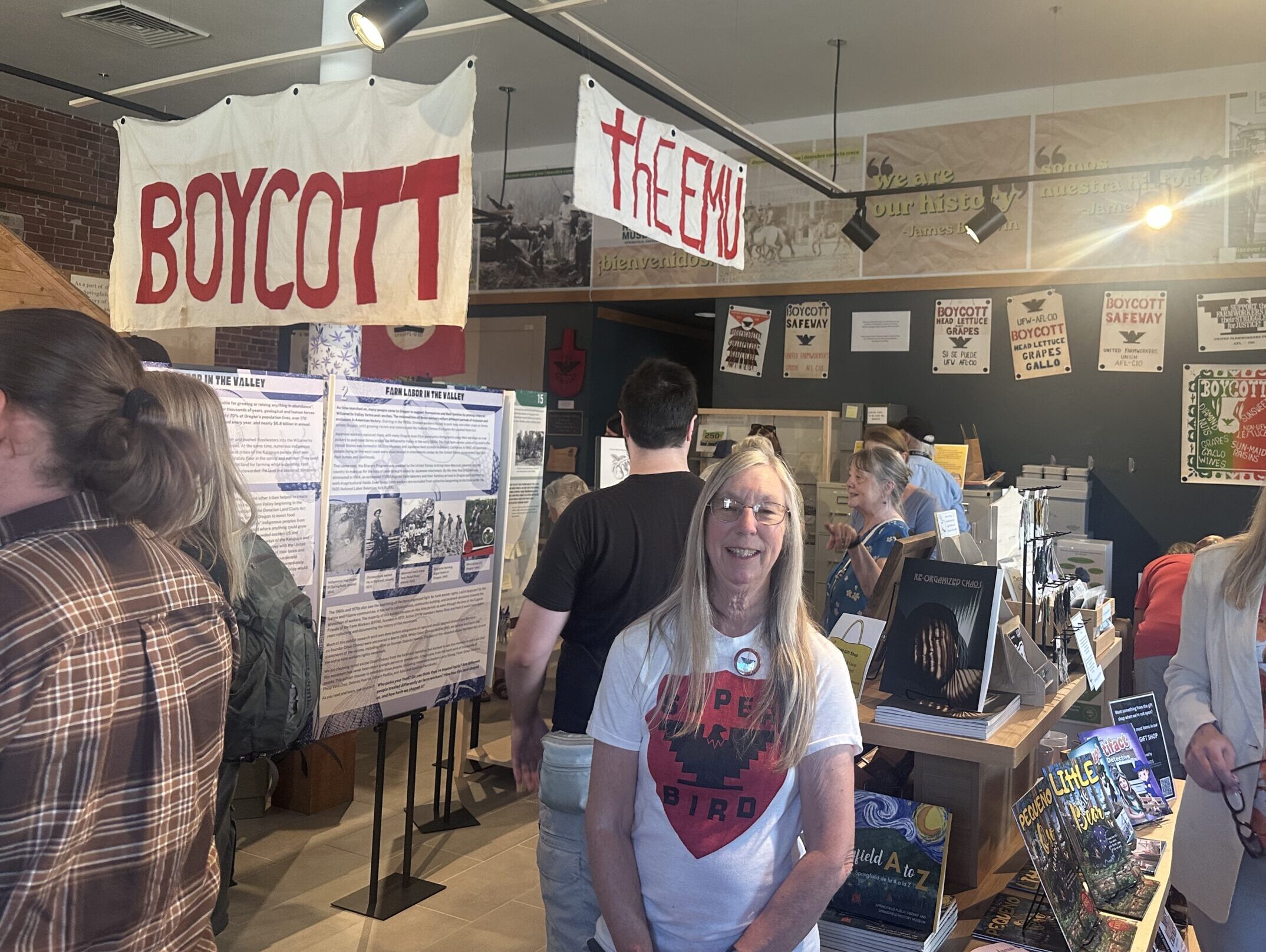
Some visible changes visitors will notice when they walk through the door at 590 Main St. are updated exhibit cases, improved interpretive signage, new flooring, and new reception and gift shop furnishings.
Museum curator Maddi McGraw said one of the goals of the renovation was to make the space more open and accessible for visitors. One way the museum did that was by mobilizing the exhibits and making them easy to move around. Signs can be moved or adjusted to make space for programs inside the museum.
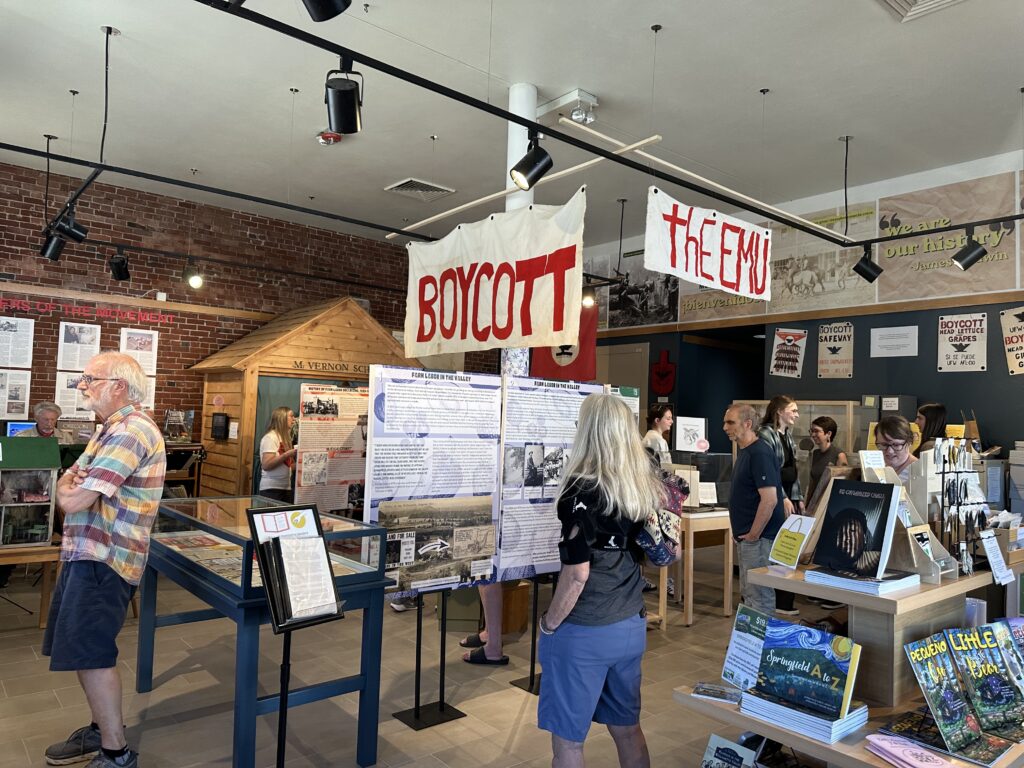
Springfield Library Director Emily David noticed one addition to the space in particular: Lining the crown molding along the museum’s walls are photographs from the museum’s archives, which are also accessible through the online database.
“We wanted to highlight the people, and so I just had to search through and was looking for people laughing and smiling, and I wanted to do pictures from all different time periods,” McGraw said.
New Exhibit
Alongside the reopening comes a brand new exhibit that highlights the people, cultures, and movements that helped shape agriculture in the Willamette Valley. Farm Labor in the Valley was developed in collaboration with community historians, including Nancy Bray and her husband Herb Everett.
The exhibit explores the history and diversity of farm workers in the Willamette Valley and Lane County from pre-colonization to the present.
Folks can discover stories of Indigenous stewards, Filipino workers in the hop fields, the Farm Workers’ Rights Movement, the United Farm Workers, local labor organizing efforts, and the individuals who helped shape agriculture throughout the region through photographs, artifacts, oral histories, and archival materials.
Featured artifacts include materials collected by Eugene Friends of the Farm Workers, including a rare 1975 home movie documenting a Solidarity picket line at Safeway, a protest at the University of Oregon, and the March on Gallo in Modesto, Calif.
Bray said a majority of the items in the exhibit come from her and Everett’s personal collection. The two met at a boycott meeting during the Farm Workers’ Rights Movement.
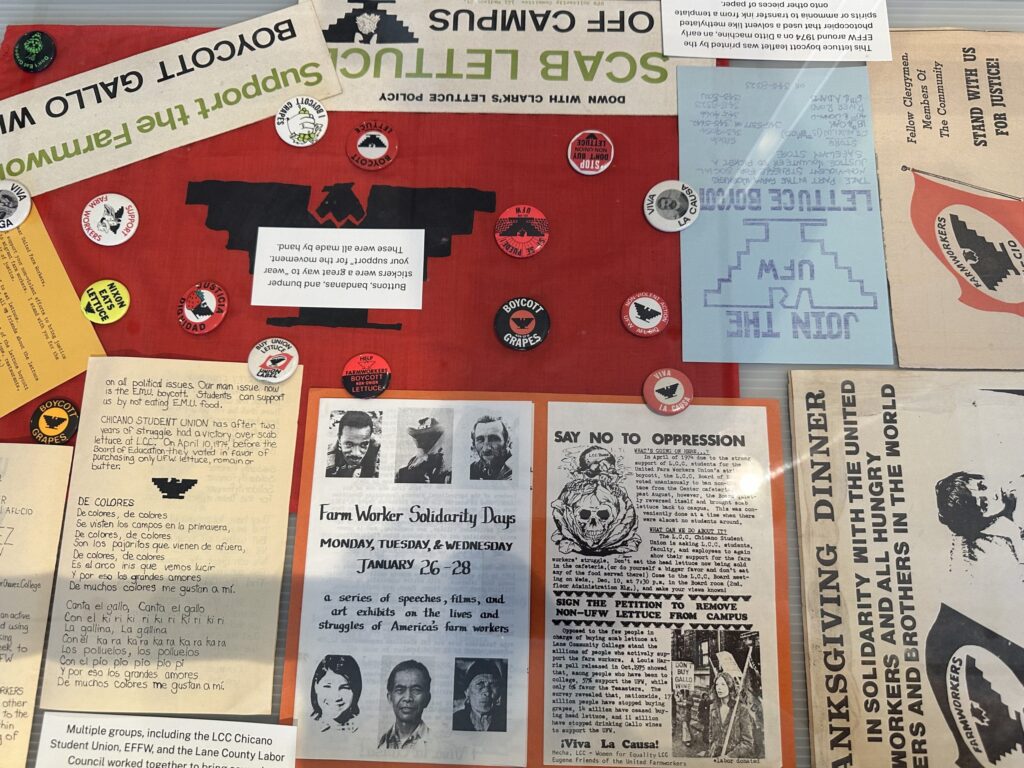
“One thing that happens when you don’t move, except for once in eight years, is, you don’t get rid of stuff,” Bray said. “So, we have all this stuff, and we’re like ‘what are we going to do with this?’”
She said that around five years ago, they took samples from the exhibit to the University of Oregon Archives, but the university did not have the capacity to display the artifacts. Bray tried the Lane County History Museum next but said the pandemic had closed it, delaying the showcase.
A few years later, the LCHM reopened, and Bray was able to display the exhibit, which she said was much smaller than the Springfield Museum’s. Bray said McGraw helped develop Indigenous and Filipino farm-labor panels for the exhibit.
“I am completely overjoyed by this,” Bray said. “Working with her, it’s just really blossomed into a much bigger, more in-depth exhibit.”
Through Dec. 26, folks can check out the exhibit at the local museum, but next year it will be off to the Oregon Historical Society Museum in Portland from March through August.