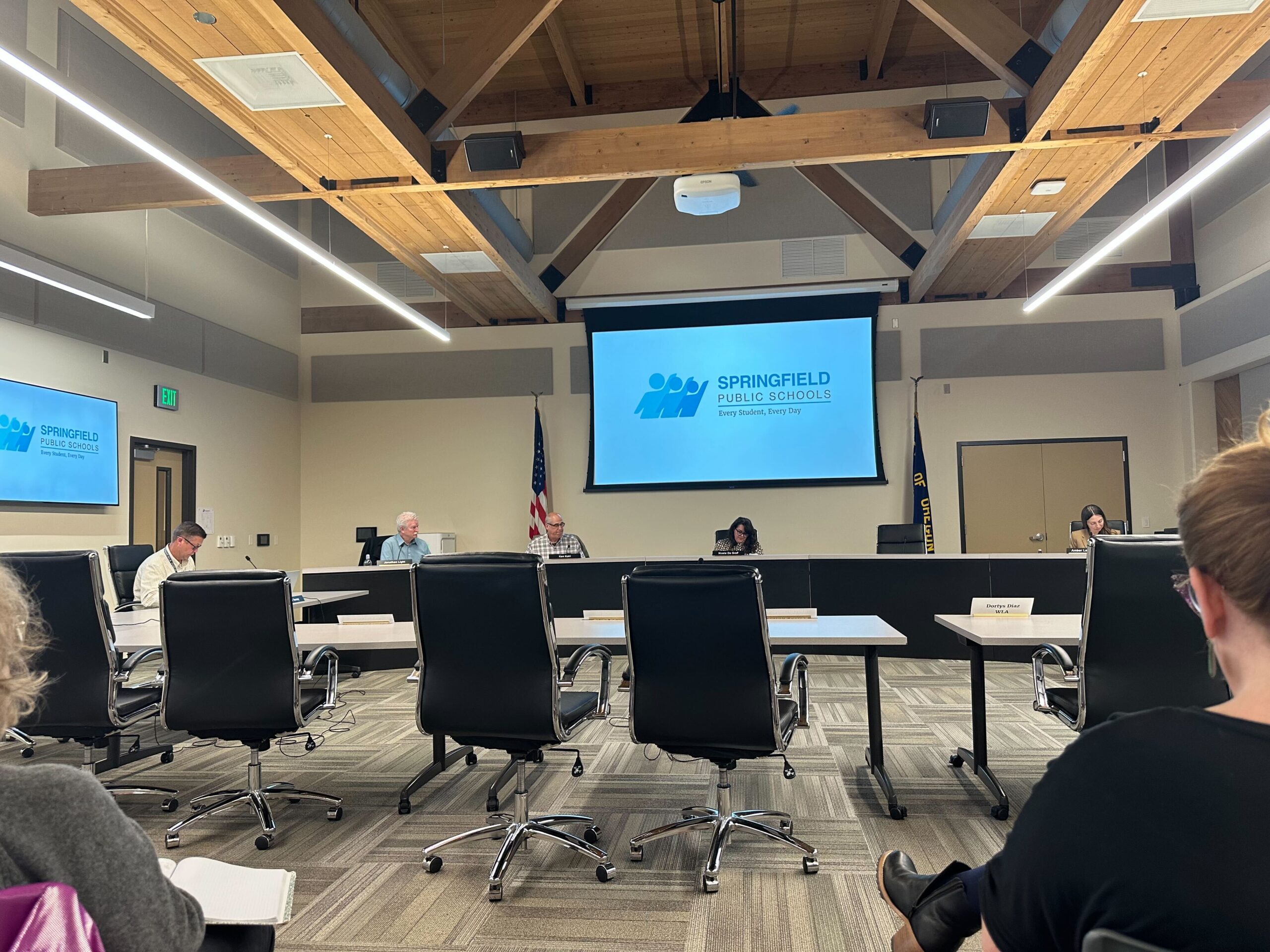
SPRINGFIELD – The Oregon Government Ethics Commission is investigating the Springfield Public School Board’s hiring process for the acting superintendent last February.
The investigation stems from a complaint issued by Nicole De Graff, a recently resigned board member. In the complaint, De Graff alleges that members of the board engaged in prohibited serial communications concerning the hiring of an acting superintendent prior to a Feb. 20 school board meeting.
OGEC investigator Silas Patterson summarized the case and recommended that the board proceed with an investigation. He said it appeared that a quorum of the board met in private and communicated with each other outside a public meeting about the decision to appoint an acting superintendent and the process for selecting one. This series of communications likely constituted a meeting that was neither properly noticed nor documented in recordings or meeting minutes, according to Patterson.
“Based on the information in this preliminary review, there appears to be a substantial objective basis for believing that the district board members may have violated various provisions of public meetings law,” Patterson said.
De Graff, who abruptly announced her resignation during a meeting on May 26, provided a statement, answered questions from the board, and acknowledged the oddity of being both a complainant and a respondent. She said the only thing she knowingly did regarding violating meeting laws was submit interview questions when asked.
“I know I’m not above the law. If I make mistakes, I definitely am going to own them. And I think accountability should apply equally, especially for a public institution like our school board,” De Graff said.
OGEC Vice Chair Jonathan Thompson asked whether any communications between De Graff and SPS Board Chair Jonathan Light included language about voting for candidates. De Graff said she only emailed him to ask when things would happen publicly, to which he did not respond, and she did not answer his direct phone calls.
“My consistent role through this process was to ask questions and raise concerns about the process,” she said.
The board decided more information was needed.
“We know discussions took place. Some of those discussions may be okay. Some of them might not be okay,” Thompson said. “I don’t feel like we know enough about the substance of those discussions, especially as it relates to other board members, to know if a quorum was discussing something they shouldn’t.”
SPS board members Ken Kohl and Amber Langworthy gave their own statements to the commissioners.
“I’m working to better understand public meetings law, and it seems challenging coming in as a volunteer to understand the breadth of rules and laws that all play a part in governance,” Kohl said.
Langworthy defended Light, who was not at the meeting, and said he was acting within reason as board chair, according to legal advice from attorney Rebekah Jacobson. She also pointed out recent resignations of other board members and administrators in the district, including former superintendent Todd Hamilton and former board chair Heather Quaas-Annsa.
“We had to expedite many things and all at once, and I believe that we stayed, especially within contact, direct contact, very close with the board attorney, where she has concluded that we had acted within reason,” Langworthy said.
“This has been very, very, very frustrating for us. … How I understand it, they didn’t have serial communication, and that’s my interpretation.”
Shenoa Payne, OGEC chair, reassured respondents that the only decision made during this meeting was whether to move to an investigation; they were not yet determining whether a violation occurred.
“I think there are a lot of things we need more answers to, and I think this case would benefit from moving forward to take a look at those things,” Thompson said. The commissioners voted to open an investigation.
According to the OGEC case process, once the investigative phase is initiated, the commission has 180 days to conduct an investigation. After an investigation report, the board can choose how to proceed from the following options:
- Dismiss the case,
- Continue the investigation for no more than 30 days,
- Find that Oregon Government Ethics, Lobby, or Public Meetings Law was violated,
- Seek a negotiated settlement, or
- Take other appropriate action if justified.