After years of barely hanging on, we have no choice but to let go.
The reality is that since the pandemic, we’ve been clinging by the tips of our fingers – believing wholly, as we still do, in the value of local, independent journalism in our small towns, where people are too often underserved and underrepresented. The printed paper and our cross-platform news business were part of something bigger than ourselves.
There were moments when we managed to strengthen our grip, but it was always one step forward and two steps back. We were never able to fully execute our vision: to build out a robust team, expand and deepen our coverage, and give our communities what they truly deserved.
What fueled our perseverance was the belief that if we remained adaptable and kept our noses to the grindstone, our efforts would yield results.
Nearly eight years since Noel purchased the paper, after seeing more than 1,000 papers similar to ours go out of business, we have reached the point where there is far too much beyond our control to continue.
We never put our heads down or ran on muscle memory. We were strategic, offering communities with virtually no other credible journalistic outlet what people say they want: award-winning hyper-local news about family, friends, and neighbors; practical reporting to make daily life easier; and curated content edited with standards that social media, AI slop, and corporatized commodity news no longer offer.
“Build it, and they will come.” But they didn’t.
Despite macro issues like federal hostility, economic downturns, political extremism, and oligarchs working to undermine the First Amendment, the reality came down to home: not enough residents subscribed, and not enough local businesses advertised.
***
Many times, when we felt close to a “tipping point” of financial stability, the current federal administration stepped in and shoved us back down. While it never crushed our spirit or determination, it did sabotage the pillars of our financial footing.
When small businesses scrambled to survive 2020, federal disaster relief loans were dangled as a lifeline. We took what we believed was a bridge to stability – a Small Business Administration (SBA) loan meant to help us weather the storm.
Instead, it became an anchor.
When the federal government ended the COVID-19 EIDL Hardship Accommodation Plan in March 2025, our monthly payments snapped back to full principal and interest. Before the change, struggling borrowers could pay 10% to 50% of their regular payment.
Suddenly, a staggering percentage of our revenue was swallowed up just servicing that debt.
We gave up our brick-and-mortar newsroom to keep journalism alive in the Southern Willamette Valley, launching a “community newsroom” model where our team worked out of libraries, coffee shops, and bookstores – where we could interact directly with the people we serve.
All the money we saved by giving up our physical newsroom was instantly wiped out by the changes to the SBA payback system. Nationally, more than 88% of those SBA disaster loans have defaulted since the government’s changes to the payback terms.
You cannot innovate, hire reporters, or keep the presses running when nearly everything you bring in goes straight back to the government for the privilege of surviving 2020.
Compounding that squeeze, newsprint tariffs have sent costs soaring, and the deliberate dismantling of the U.S. Postal Service has threatened our delivery pipeline.
I remember when Noel sent me an illustration of a miner burrowing deep into the earth, only to turn away just inches before striking diamonds. We invested hundreds of thousands of dollars and endless sweat equity searching for those diamonds. If they existed at all, they have since been unearthed, taxed, and allocated elsewhere amid the corruption and greed at the highest levels of power.
We are out of options, out of funds, and at the end of our timeline.
***
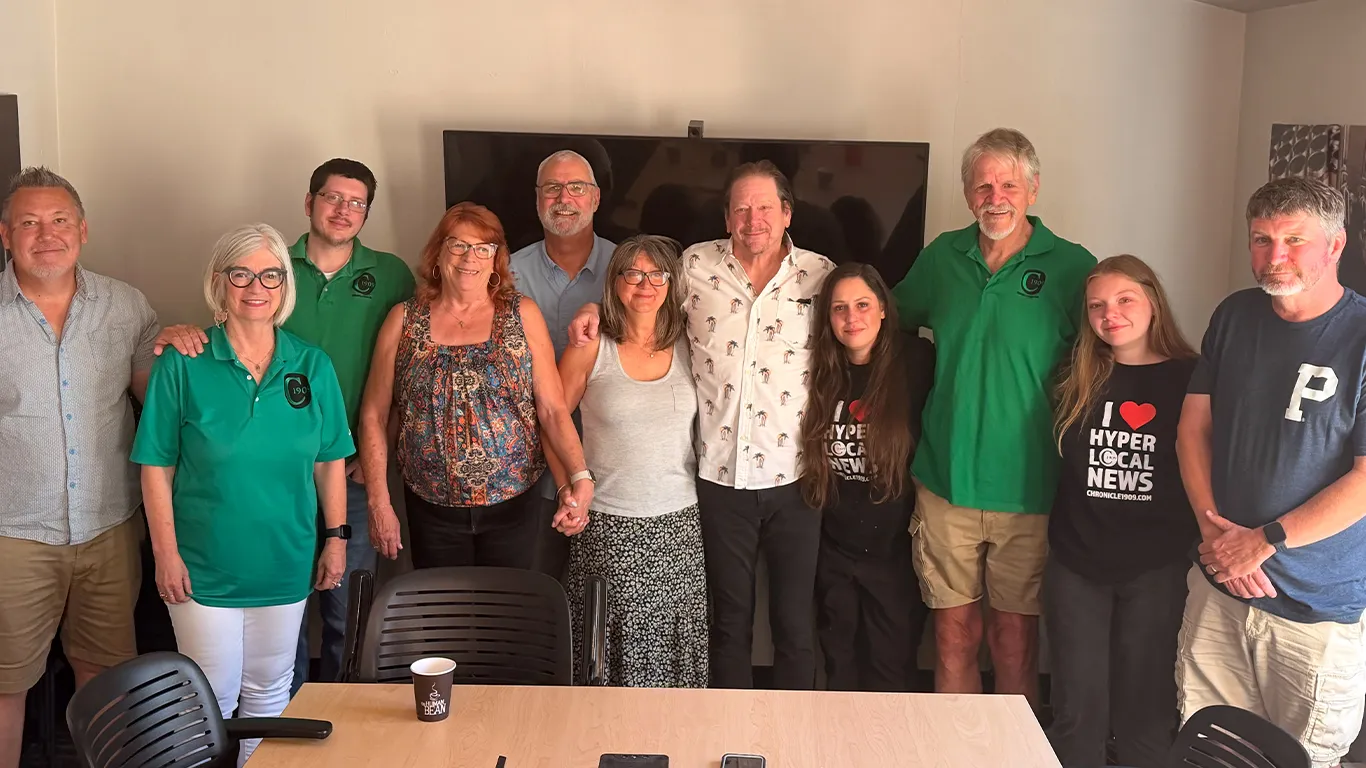
It was never for a lack of effort. Every single member of our team poured everything they had into The Chronicle. Most worked on a “hometown discount” because they believed in the mission.
We did it for the love of the craft, for the newsroom family we created, and for the communities we fought to inform. But living under constant financial stress has taken an inescapable toll physically, mentally, and emotionally.
In September, I would have celebrated 10 years at The Chronicle. This job has been my whole life – all I talked about, all I did, all I wanted to do.
When a local newspaper dies, a community loses far more than just ink on paper. It loses its mirror, its public record, its watchdog, and its storyteller. I worry deeply about what fills the void when small-town news goes silent – who will hold local officials accountable, who will celebrate the high school athletes, and who will record the history of this place.
I don’t know what comes next for me, or for any of us who poured our souls into these pages. But I do know this: serving you, telling your stories, and fighting for our communities has been the greatest privilege of my life.
Thank you to everyone who ever read an article, bought an ad, or believed in what we were trying to build.
We fought until the very last line.
– 30 –
Erin Tierney-Heggenstaller was the executive editor and part-owner of The Chronicle.