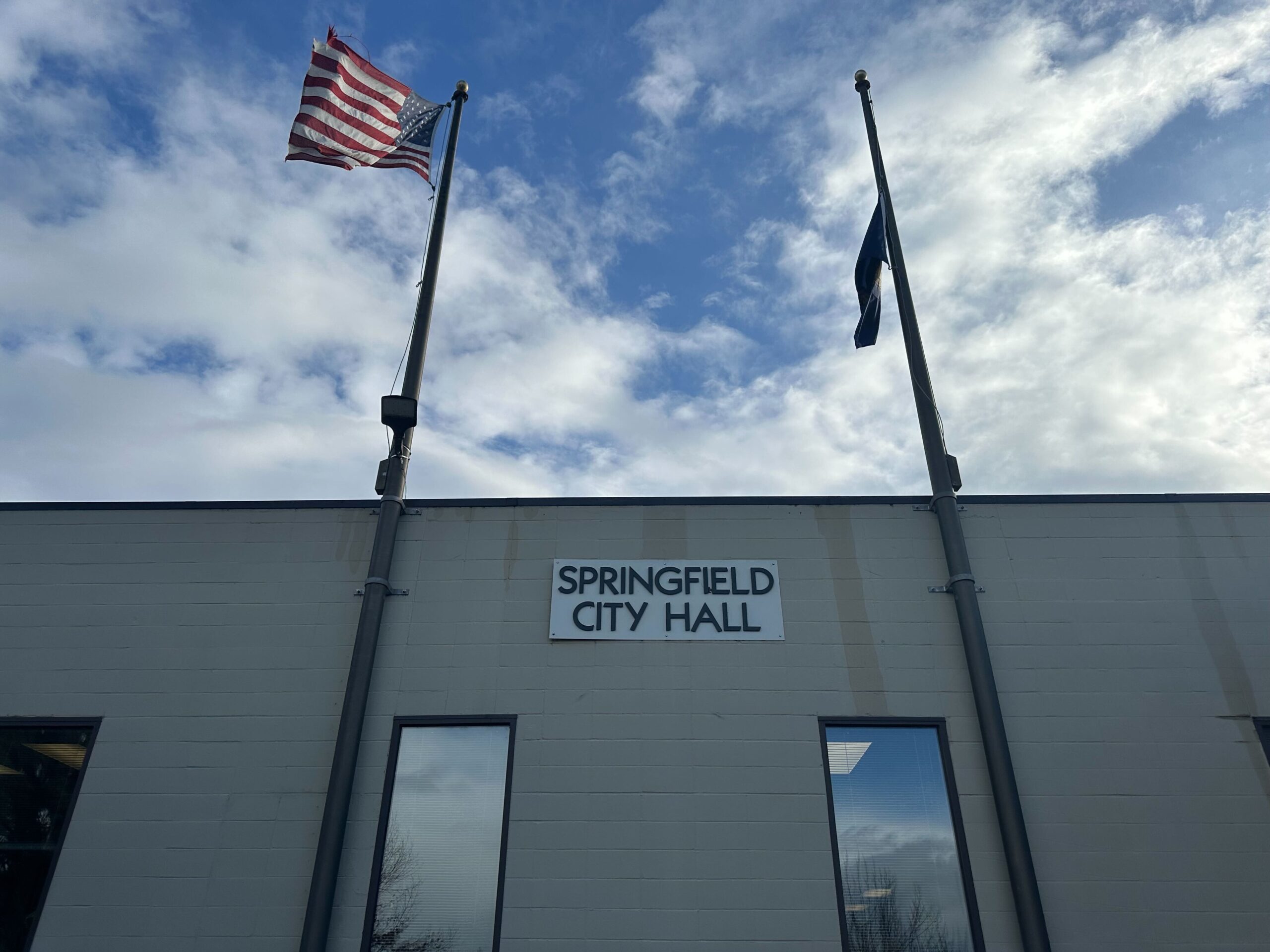
SPRINGFIELD – City councilors are moving forward with a .1% rate as a proposed employer and employee payroll tax, which was discussed during Monday night’s city council meeting. The proposed rate is estimated to generate $2.45 million within the first year of implementation.
The decision is part of a multi-pronged approach to stabilize the City’s General Fund, based on recommendations from the Fiscal Stability Task Force. Finance director Nate Bell shared a five-year forecast, including the payroll tax, with councilors so they could see the impact of a .1% rate.
The five-year forecast did not include any costs that might arise from deferred maintenance of City facilities or the financial impact of new fire governance structures. However, it did include a $300,000 cut to the library budget.
According to Elyse Ditzel, Springfield’s public information officer, the forecast included a $300,000 reduction to the library as part of the broader draft budget. Those proposals have not been approved and will be reviewed through the Budget Committee process in May, followed by additional public input and Council consideration.
“It does not include any deferred maintenance on City facilities, which is significant and growing. That includes City Hall, includes our Justice Center, which I think is now approaching 20 years old, and includes all five of our fire stations,” Bell said. “It does not include the financial impact on the new fire governance structure. Those conversations are happening right now. We know that structure is going to change. We just don’t know what it’s going to look like, but what we can say is, whatever structure it is, it’s going to cost more than the current structure that we have.”
City manager Nancy Newton said she has concerns about significant costs not being included in the forecast, especially after last fall, when the council saw renovations needed for City Hall’s HVAC system.
“That’s one thing I’m really nervous about, which I know is an imminent expense on us,” Newton said. “Also, some of the decisions that we’re going to be making around how we do fire services as a merged, separate entity, or separately, that’s a massive policy change and potentially organizational change.”
When councilor Andrew Buck asked how the costs for deferred maintenance are determined, Bell said the City should set up reserves for future expenses.
“If you’re a homeowner, your roof lasts 30 years, then you want to be setting aside dollars over 30 years so when that day comes, you’ve got the funds available to replace your roof,” he said. “We should be doing that as well in the city. We should have significant reserves so that we can address a lot of these deferred maintenance needs. A lot of them shouldn’t be deferred at this point. And I’ll be honest, it’s hard for me to talk about this, because in some ways it feels negligible in the fact that we don’t have this in our budget, we are struggling just to fund our daily operations, let alone save for anything in the future. And that’s not unique to us.”
He described the payroll tax as a tool to increase the tax base.
“We want to attract more businesses, bring more businesses into the community. That’s how we’re going to get more leverage out of this tool,” he said. “Let’s bring businesses in here. Let’s increase payroll. Let’s increase that revenue so that the percentage stays the same, the benefit rises.”
He also pointed out that a significant number of people who live in Springfield work in Eugene and pay payroll taxes there. Likewise, a significant portion of the workforce in Springfield comes from outside the City and does not pay property tax but still enjoys the benefits of the City’s fire and rescue services.
“This is just a way to diversify the base and have a more equitable kind of demographic of paying those taxes,” Bell said.
Nobody questioned the library cuts. Council agreed to continue with the .1% rate as a starting rate, understanding that it is not a fix for all the challenges the city is facing. The proposed payroll tax is one component of a broader fiscal strategy and, on its own, does not resolve the City’s structural deficit. Decisions regarding service levels and reductions will continue to be addressed through the City’s annual budget process.
“Even though we have a five-year forecast, nothing is solid; it’s guesstimates with a lot of factors that we don’t know about yet,” Councilor Michelle Webber said. “Just keeping that in mind as we’re talking through this, we know these are numbers that we don’t necessarily guarantee are accurate six months from now.”
A public hearing and first reading are scheduled for April 20, where folks can provide public input.