The Springfield Public Library was formed in 1908 by the Ladies of Springfield. Relying on purchased and donated books and a year’s subscription to Oregon Monthly Magazine, the library has since transformed into a vital free resource for the community. A wide array of volunteers and staff members help make the library feel like a safe space, a second home, and a secure environment for anyone who walks through its doors.
From previous mayors to current school librarians, the community of folks who work at the library have a long-standing joy for what they do. Whether it be shelving books, helping craft a resume, or recommending a new favorite read, they are there to assist.
“We have all these different folks that come together and create this community of people working to make this a public space for the larger community,” Emily David, library director, said.
They play a crucial role in maintaining the library so it can support the entire community. The library collaborates with local schools and organizations to provide access to books and free resources.


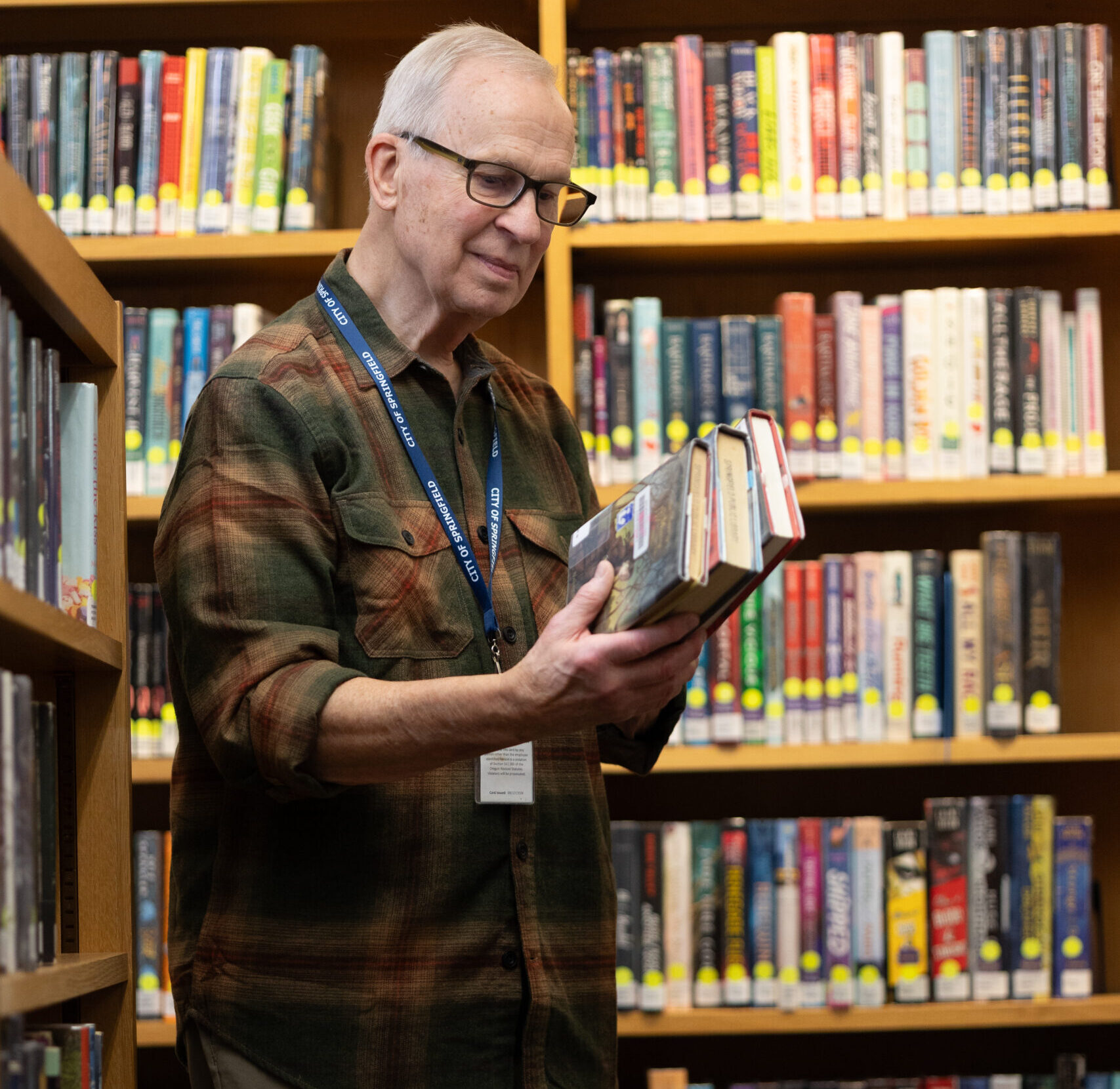
Jim Lauinger used to spend his days in Bellevue, Washington, before moving to Springfield. He was the mayor of Kirkland from 2006 to 2009 and was deeply invested in the community. After retirement, slowing down didn’t seem like the right fit.
“Suddenly bringing it to a close, just did not feel good,” Lauinger said. He also noted that the last thing an elderly person needs is to be alone and sequestered.
“This is good for both, because I’m moving all the time. I see wonderful people in here, people I work with, as well as our patrons. And there are regular patrons here every day. So you get to know the community,” he said.
Lauinger volunteers six times a week for about four hours each morning. He puts books away, makes sure the library looks nice, and finds books for online holds, which he says is neat because he gets to see what folks are reading.
Another part of his job is greeting people. No matter who.
“Some of them are homeless, yes, but they want to also be part of something,” Lauinger said. “They don’t want me to bore in on them and ask them personal questions, but they’d like me to say good morning, recognize they’re a fellow human being.”
He mentioned parallels between libraries and democracy, saying, “Probably the last fragment of democracy is a library. Everybody comes in here. We’re all equal. We’re looking for things, we get help, we spend a day, and we’re building community,” he said.

Longtime volunteer Karen Salman started her journey at the library in 1998. Coming from a reading family, the draw to the library was natural.
Salman spends about a third of her time volunteering at the library and two-thirds of her time accounting for the Friends of the Springfield Public Library and managing its online store. By default, she also manages the Friends of the Library’s annual book sale, which she says volunteers inquire early about to get a spot working the event.
Another way the library supports the larger community is by donating books to the local jail and care facilities. Salman sorts through books to collect and gets them ready to be sent over. She estimates around 20-30 books get sent to the jail every four to six weeks.
Jennifer Archer works full-time at the University of Oregon in communications, is a member of the Friends of the Springfield Public Library, and manages the library’s “Bring ‘Em Back” collection.
“If somebody comes in and they don’t have a library card, instead of leaving feeling bad without a book, they can just come and get something from Bring ‘Em Back,” Archer said.
“If you’re from out of town or something and you want a book or you’re living in another town, you can just borrow it or bring it back, or a lot of people take them on vacation and put them in a free library wherever they go,” she said.

Krista Raasch emphasized the importance of volunteers, saying the library relies on them to help shelve books. “We really, literally could not run the library without them. They play a very important role on so many levels,” she said.
Raasch is a library technician and volunteer coordinator, creating volunteer schedules and handling behind-the-scenes backroom duties.
She mentioned the library’s intertwined relationship with local school districts for students looking to fulfill their volunteer hours or gain work experience. David also said the library has a history of working with various organizations to support volunteers developing life skills.
“It’s exciting, because we’re able to welcome in so many different levels, because it’s about the student, but it’s also about the support staff, the EA that’s with them. It’s about the teacher, or the rings of community outside of that, too,” Raasch said. “I think collaborating with the school districts is really great.”
Raasch hopes that welcoming folks into the library at a young age will lead to them coming back, and with friends.
“I want them to know this space as a place for them,” she said. “Ideally and hopefully, they’ll come with maybe their caregivers, their families, and so building that connection now, I think that is really meaningful.”
David agreed that establishing those relationships with people keeps them coming back.
“We find this is true of having a Latino liaison, someone who speaks Spanish. That’s when you go out in the community, and somebody learns that you have a Spanish speaker, and they’re a Spanish speaker, then they feel more comfortable coming in,” David said. “They know they can find somebody who can help them in that language. Similar to how these kids are coming in, they’re becoming comfortable with the space.”
One program that relies on student involvement is the Teen Advisory Board (TAB). Cara Kinsey is the teen services librarian and manages TAB. Kinsey said the board helps plan programs for teenagers.

“I do a lot of looking around for what my teens want to do. But, I want a real teen voice to inform the choices we make, mostly in programming,” she said.
Aerin Sharp spent the last seven years with TAB before graduating from the program at 20.
“It’s a great way to learn leadership skills and learn how to work with a team in an environment that promotes personal growth. I gained a lot of confidence running programs,” Sharp said. Now, Sharp is part of the Young Leaders Program, which has coordinated events with the library, and this is how Sharp got involved.
“I could do things without them, but it just would not be the same,” Kinsey said. “That’s what I think is really important, recognizing the power of volunteers in the community. In some ways, they get something out of this. They get the community service hours and the leadership potential and the potential to have me write a reference, if they ask me, all of that’s great, but we get something out of it too.”
In an effort to engage the community, no matter the age, TAB is composed of kids in grades eight through 12 who provide input on how to make the space teen-friendly through book recommendations and suggestions for activity programs. They meet regularly to plan events like laser tag in the library and putt-putt, as well as day-to-day things, like setting up and cleaning.
“There are a lot of ways that we work to support the community, and at the same time, the community supports us. It’s very much a give and take,” David said.