As I prepare this week’s edition of The Angler’s Log, I’m excited to report that winter steelhead have returned to Oregon’s coastal rivers and streams for their annual spawning run, a tradition that has lasted for millennia. This season typically lasts around three months.
A steelhead is a migratory fish that gleams like chrome and has a life cycle similar to that of salmon. Like salmon, they hatch in the river, where they can live for up to a year. As juveniles, known as “smolts,” they eventually migrate to the ocean. After spending one to two years maturing and feeding in that rich environment, they suddenly return, like a “gray ghost.”

Their bodies weigh between seven to 15 pounds, with some much larger, and they shine like chrome in the water, especially after a high-water event. This remarkable return effectively resets the life cycle of what is truly a magnificent game fish.
The season has just kicked off
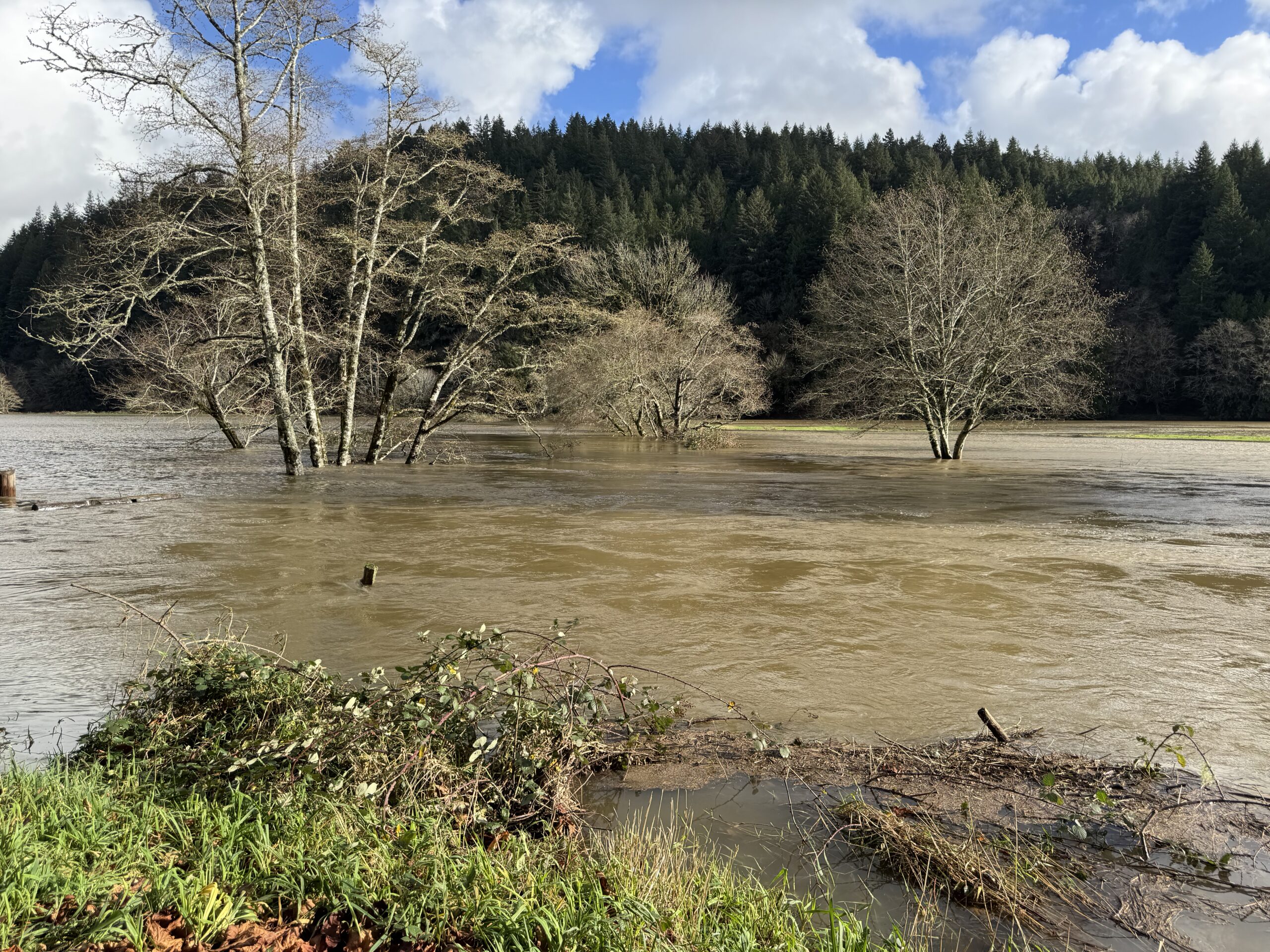
At the beginning of the season, anglers have been experiencing fluctuating river levels, which are typical for late December and early January in the Pacific Northwest. Looking back to the last several days of 2025, nearly every central coast river reached flood stage, including the Siuslaw River in western Lane County. This heavy rainfall saturated the river drainage, and since then, additional precipitation has continued to fall. As a result, the Siuslaw and most other midcoast rivers remain elevated, at the upper edge of productive conditions.
An “atmospheric river” is predicted to hit the Oregon coast around the time this week’s Chronicle is published.
The good news is that the winter steelhead season is now underway on rivers and streams along the coast. Although the current hydrological and atmospheric conditions are somewhat harsh, they are to be expected in early January and bode well for a successful season ahead.
Do your research; it pays off
Unstable conditions can be managed with a current weather forecast. I use a weather application on my phone, along with links to my favorite rivers that I downloaded from the Northwest River Forecast Center: https://www.nwrfc.noaa.gov/rfc/. This site provides real-time river level information and indicates the current trend, showing whether the river level is rising or falling. Additionally, the site offers predictions that extend several days into the future.
A word to drift boat captains
Winter boating requires your full attention. Always make sure to wear a properly fitted life jacket, and ensure that your passengers do the same before pushing away from the bank. It’s essential to carry an easily accessible spare oar, an extra boat plug, and a bailing bucket. I also recommend having what I call a “survival kit,” a practice I adopted from my river rescue training.
In a waterproof “dry bag,” I keep my first aid kit, which meets the standards of the professional first aid training for which I am certified. This kit includes several poly jackets and pants, thermal blankets, hand warmer packets, a windproof lighter, and a small collection of wood chips and sap sticks. After all, nothing warms a cold, wet person faster than a fire.

After every winter storm, boaters should be prepared for changes in the environment. The most common change is the presence of fallen trees. Additionally, after a moderate rise in river levels, you might encounter alterations in the river channels and the accumulation of woody debris along the banks. Rivers are dynamic, constantly changing—especially when affected by significant weather events.
Unfortunately, there is no real-time system to notify boaters about fallen trees in the river. However, there is an “after-the-fact” reporting system that many river boaters find useful, which can be accessed at oregon-boating-obstructions-geo.hub.arcgis.com.
Email:
[email protected]