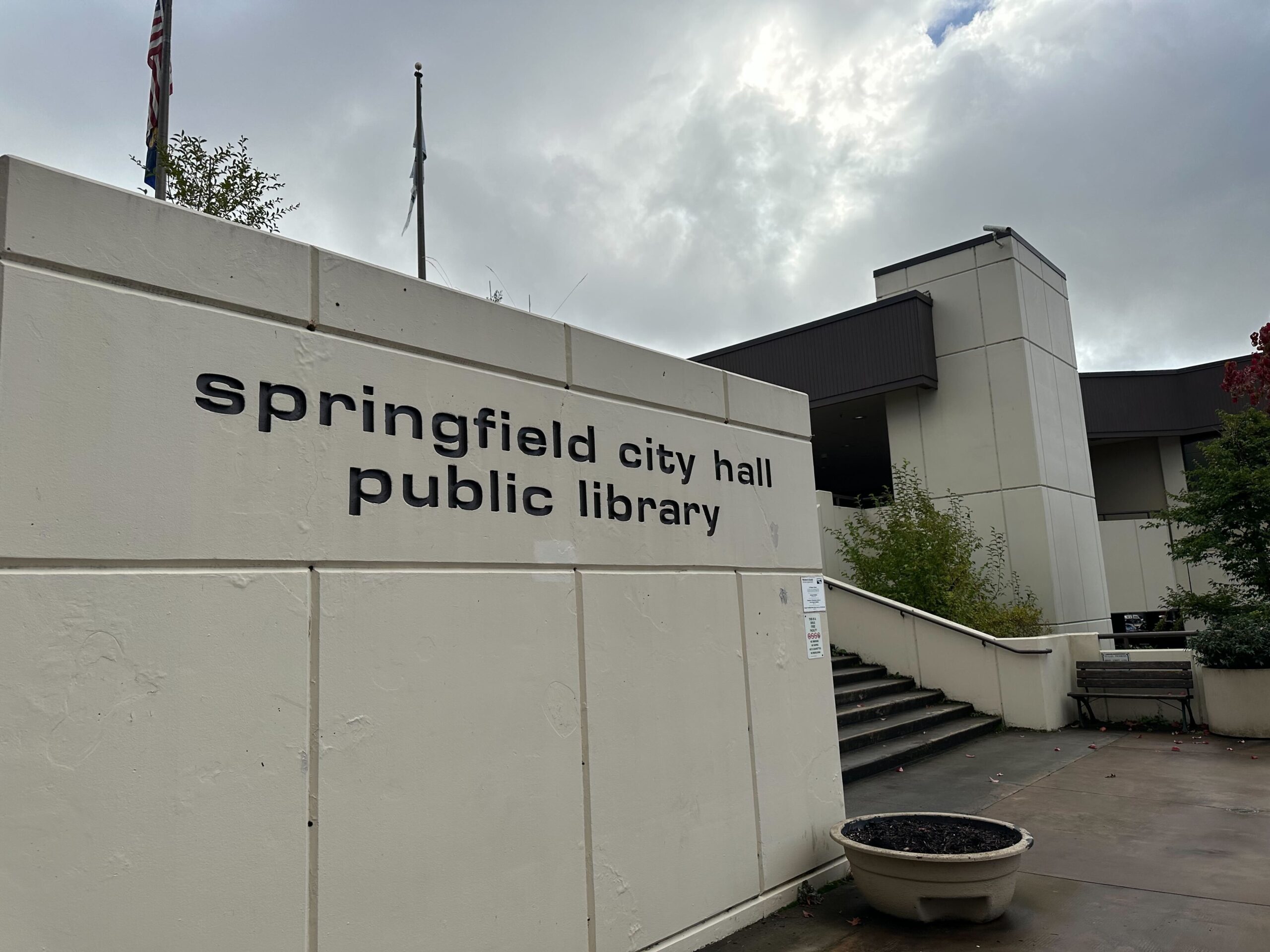
SPRINGFIELD – During its last meeting before summer recess, the Springfield City Council on Monday dissected whether to bring a piece of North Gateway property into the city limits for use as a behavioral health campus, a project that could shape both mental health services and traffic in one of the city’s busiest employment districts.
At a June 22 meeting, the council considered whether to annex roughly 18 acres north of International Way, near the former Royal Caribbean call center and adjacent to FedEx. Lane County owns the property and wants to partner with PeaceHealth to build a crisis stabilization center and state‑licensed psychiatric hospital there. The proposed campus would cost upwards of $35 million and co-locate short-term stabilization with longer-term inpatient psychiatric care, and PeaceHealth targets opening the facility in 2027.
With no development application filed yet, the question before the council is whether, and on what terms, to annex the site, leading councilors to weigh how state law might later constrain the city’s discretion, how the project fits the City’s Comprehensive Plan, and what it means for traffic in an already congested area.
Zoning considerations
City Attorney Kristina Kraaz told councilors that House Bill 2005, a 2023 law designed to fast‑track behavioral health infrastructure, does not yet control this decision. The bill requires cities to allow crisis stabilization centers and psychiatric hospitals on certain publicly owned, employment‑zoned land without a zone change or conditional use after a development application is filed and basic service requirements are met, Kraaz said.
“You can’t violate HB 2005 in your annexation decision,” Kraaz assured the council, noting that no application is pending and the City still has full authority to approve, deny, or condition annexation.
Council also considered where the proposal fits within the City’s Comprehensive Plan. The property is designated Campus Industrial under the Gateway Refinement Plan – an employment category that doesn’t neatly contemplate a hospital complex. Some plan policies say urbanizable land should be converted to “urban uses as shown on the comprehensive plan map.” That newly annexed land may be developed “with permitted uses” once urban services are provided.
Kraaz asked the council to consider whether “permitted uses” should mean only what current zoning allows, or any use permitted by law, including state‑mandated facilities such as those endorsed by HB 2005. Mayor Sean VanGordon said it would be difficult to maintain a reading that effectively ignores state law once the county and PeaceHealth submit plans. Kraaz called the situation “a unique circumstance for Springfield,” noting the city has not seen an annexation where a state law could later supersede local zoning on a Campus Industrial site.
Neighboring businesses, including Richardson Sports, have already filed a separate lawsuit challenging the application of House Bill 2005 to Gateway. Kraaz said the city does not need to wait for that case to be resolved and is structuring the annexation so it can stand regardless of whether the state law is upheld or struck down.
Street, traffic flow
Street design and traffic flow also posed concerns. The city’s Transportation System Plan calls for Maple Island Road to be built as a collector through this area, and older development agreements contemplated a more direct north–south local street cutting across or near the property. A 2005 agreement marked that segment “deleted,” but did not clearly say whether the concept was abandoned or only the cost allocation.
That said, Lane County and PeaceHealth have pitched an L‑shaped local access road with multiple 90‑degree turns, tying into Maple Island and avoiding a straight north–south corridor that would push their buildings farther south.
Councilor Michelle Webber toured the area and said right angles worry her for freight and emergency access. Councilor Kori Rodley agreed, describing the layout as “jiggity jaggedy” and said she is uncomfortable with that configuration, “with what’s there and what’s planned to go there.”
The project would also increase traffic at the already‑stressed Gateway/Beltline interchange. By the applicants’ own analysis, Kraaz said that the behavioral health campus would generate 41 additional peak left‑turn movements, about 11.4% more traffic on the eastbound Beltline‑to‑Gateway turn. ODOT monitors that approach because queues can spill back onto the Beltline and the I‑5 ramps, Kraaz said.
Kraaz viewed it as a cost‑sharing issue and floated an annexation agreement requiring Lane County and PeaceHealth to either pay for a long‑planned Gateway traffic study or make another proportionate contribution, similar to what earlier Gateway developers have paid.
The site also cannot be fully served by the city sewer and other urban utilities until it is annexed. If the council ultimately decides to annex, staff are recommending a detailed annexation agreement that would lock in required water, sewer, stormwater, and street improvements, secure a more functional north–south route than the current L‑shape, include traffic mitigation at Gateway/Beltline, and establish a good neighbor agreement to manage public safety impacts around the campus.
The public hearing on the annexation is closed, and no vote was taken on Monday. During the summer recess, staff will revise and update the staff report and proposed findings based on public comment and council direction, and will draft an annexation agreement.
Kraaz said the goal is to return in September, when meetings resume after the summer break, with “a very clean and as close to final set of findings” so the council can make its final decision. City officials acknowledged that whatever Springfield decides is likely to be challenged before the state Land Use Board of Appeals, given the complexities of state law intertwined with significant local interests, and both parties have already engaged legal representation to prepare for potential disputes.