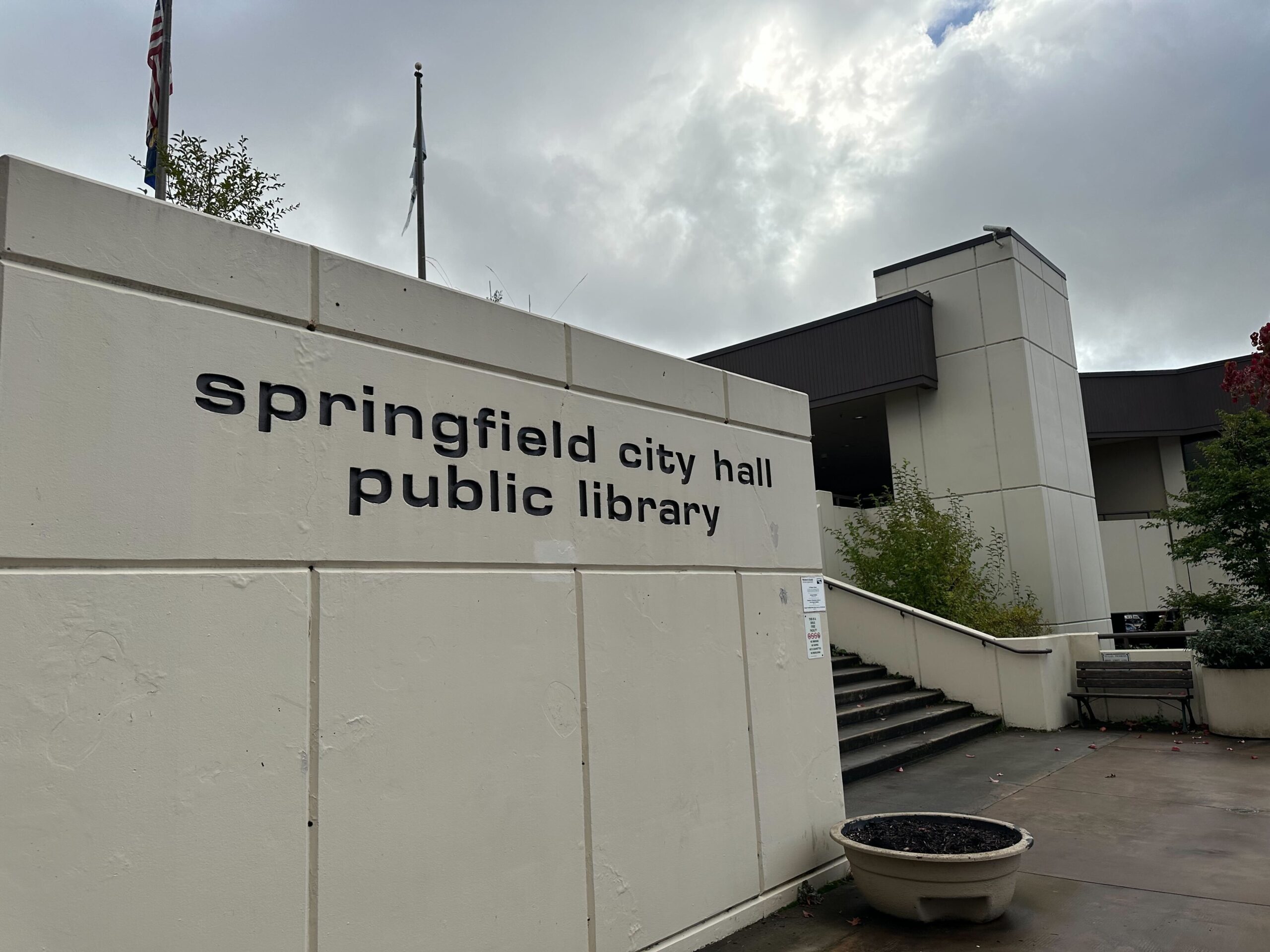
SPRINGFIELD – As the city of Springfield begins finalizing the fiscal year 2027 proposed budget, the time for public feedback has passed. Monday night marked the trio of budget committee meetings before the proposed budget is sent to the city council for approval in June.
The Springfield Budget Committee, comprising six city councilors and six community members appointed by the City Council, will meet at 5:30 p.m. Monday through Wednesday this week, May 4-6. Committee meetings are open to the public and will be held at the Springfield Justice Center, 230 Fourth St. The meetings will also be livestreamed on Zoom.
Finance director Nathan Bell started the meeting with a brief training for Elliott Harwell, Jill Cuadros, and Andrew Buck, the newest members of the forum. Shortly after, he introduced the budget overview, including a five-year forecast.
“There’s a lot more interest in the budget process than I have ever experienced in my 20 years in the city,” Bell said. “This is our first budget cycle after the Fiscal Stability Task Force and their recommendations, and this really is the first year that we are using this as a tool to implement those recommendations.”
The proposal suggests a total operating budget of $155.78 million, with 2027 general fund expenditures totaling $49.76 million. The general fund supports the city manager’s and attorney’s office, police, fire, finance, IT, the municipal court, library, and development and public works.
Bell said that $450,000 will be used from the city’s reserves to balance this year’s budget. Deferred maintenance is not included in the five-year forecast, which totals around $367-433 million. Delays to deferred maintenance can result in increased future costs and service risk.
The general fund’s primary source of revenue is property taxes, but state laws limit this revenue. Because of these limitations, the city’s biggest revenue source does not support its biggest expenditure, public safety.
Through Measures 5 and 50, total property tax revenue is capped and frozen at their 1996 levels, and growth is limited to 3% per year. Over time, this has created a gap between the assessed value and the real market value.
Bell provided background on how the city has taken initiatives to address the challenges posed by the measures. Although the city has trended toward reducing services through budget cuts and reductions in full-time equivalent positions, this year, recommendations from the Fiscal Stability Task Force on cost reductions, revenue options, and economic development helped eliminate the budget gap.
Impacts on the library
The Task Force explored cost-reduction and revenue options to mitigate an estimated $4.5 million budget shortfall by fiscal year 2027–28. One of those recommendations was a $500,000 budget cut to the Springfield Public Library. Bell shared a proposal for a $310,000 reduction.
“We felt that $500,000 was just too much of an impact,” he said.
Staffing has decreased across all departments over time. Since 2009, around 23 FTE positions in the city have been reduced, including 6.3 from police and 1.9 from the library. According to the proposed budget document, the library had 13 FTE positions budgeted for FY26 and is proposed to go to 11 FTE for FY27. Police had 83 FTE positions for FY26 and proposed 83.2 for FY27.
The library, fire, and life safety are experiencing cuts in FTE of 2 for FY27. The library accounts for 2% of the city’s total operating budget, and fire and life safety account for 18%.
During the meeting, each department leader shared recommendations and challenges for their department. Library director Emily David said there is uncertainty about the proposed cuts to the library.
“That’s the smallest the staffing has been in the nearly 18 years that I’ve been here, and that will also mean a reduction in our hours, which will be the fewest hours that we would open in my tenure,” David said.
She said a conservative baseline of services will be utilized to avoid burnout of the dedicated and passionate staff members. Most outreach services – which are how the library reaches the greater community–will be eliminated.
A public survey will be available for community members to provide feedback about what services are most important to them. David said the programs she hopes to maintain are early literacy, technology assistance, and Spanish language and cultural programming.
In an attempt to cut costs, the library is considering a new, open-source integrated library system that could lead to significant savings in the future.
David also said that recruitment for a new director will begin early next year because she is retiring next June.
“There’s quite a bit of change and uncertainty coming up for our department, and what I can say is that I know that our staff will continue to welcome people into our space in a very respectful way and continue to meet their needs as they come through the door,” she said. “I also just want to say that libraries remain vitally important as third spaces, and so I really think it’s important that we find sustainable funding for our library going forward.”
Public weighs in
According to Elyse Ditzel, Springfield’s public information officer, in previous years, each budget committee meeting was allotted 20 minutes for public comment. This year, one hour was dedicated at the end of the first meeting. This is to ensure public feedback is received before deliberations start at the next meeting.
Nine folks gave public comments. Eight people opposed the library budget cuts or discussed the value it brings to the community. The committee will consider these testimonies in future budget decisions.
Blake Helm, an Oregon Department of State Lands employee, shared his disappointment with the recommendations regarding the library.
“Our library is already staffed below the average in Oregon. Currently, there is one staff for every three at the typical Oregon library. That’s a sizable difference,” Helm said. “Note that cutting services to the library will disproportionately affect the most vulnerable in our community.”
Callee Ackland, an organizer with Save Springfield Library, explained how the library draws business to downtown Springfield and better the community as a whole.
“We know that our library brings an average of 50 people per open hour to the library, and therefore to the downtown area. Library patrons often visit cafes, restaurants, stores, and other venues before or after a visit to the library,” Ackland said.
She pointed out Oregon’s low reading proficiency and how one in five Springfield School District students does not graduate on time and said library reading programs help improve the academic achievement of at-risk students and improve high school graduation rates.
“The library ensures that everyone, no matter their income or their background, has the tools they need to learn, to connect, and to thrive. We need our library now more than ever. Please don’t cut off the heart to save the body,” she said.