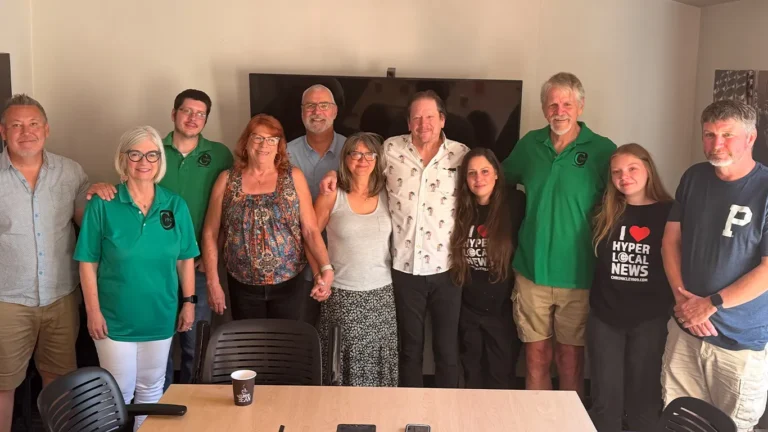
SPRINGFIELD – Retired and current teachers, concerned members of the community, and a few Springfield Public School Board members gathered in the city council chambers to brainstorm ways to address Springfield schools’ declining enrollment rate.
Sarah Bosch, a former Springfield Public Schools teacher who ran for the Springfield School Board last year, led a Community Alliance for Public Education (CAPE) community forum last Wednesday with retired teacher and CAPE founding member, Larry Lewin.
The Fall Membership Report 2024-25, released by the Oregon Department of Education, shows enrollment has dropped by 2,202 students since the 2017-18 school year. Officials at ODE attributed the 20% decline to lower birth rates over the last decade, rising housing costs pushing families to more affordable areas, and a shift during the pandemic in which families switched to the homeschool or online charter school model.
“We are not unique to falling student enrollment,” said SPS director of communications and community engagement Brian Richardson.
The forum addressed internal and external factors affecting declines in public school enrollment. Bosch conducted an anonymous survey of parents and guardians of SPS students, asking whether they had unenrolled their students and, if so, why. The results of her survey showed that 40% of people polled took their student out of SPS to be homeschooled, 30% used online curricula, and 30% moved to a different district entirely.
According to Rosch, 66% of folks who unenrolled their children did so because either class sizes were too big with not enough staffing, emotional safety concerns, or physical safety concerns.
“Kids are not feeling safe in school for whatever reason, sometimes that’s physically, sometimes that’s emotionally, and then some, there was some negative peer influence,” Bosch said.
The other 33% of respondents said “other,” with the most popular response being that special education needs were not adequately met, citing limited or no variety in classes or subjects, as well as students being bored or not challenged at school.
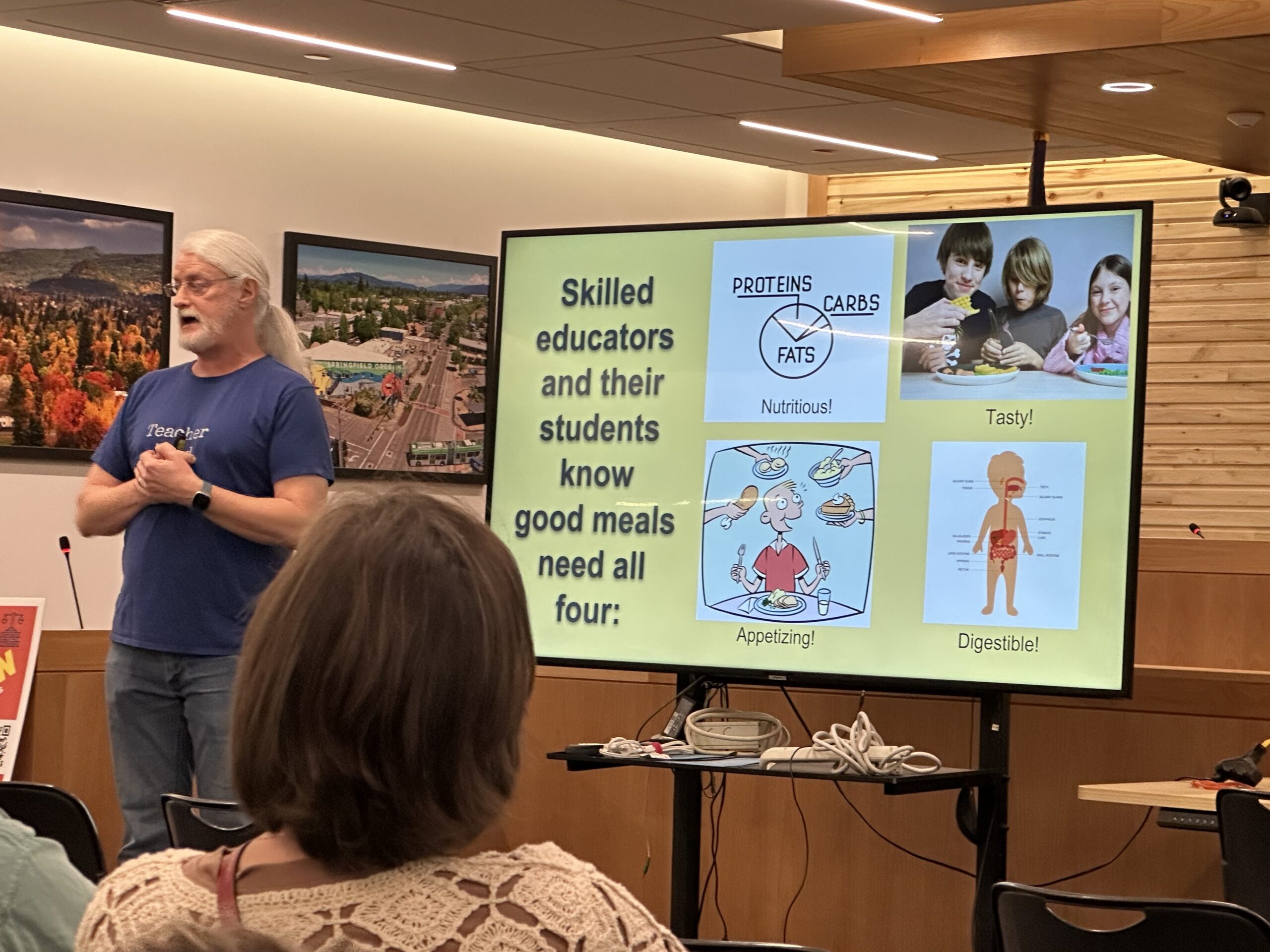
Page Elementary School teacher Mikell Harshbarger explained the current SPS curriculum with a food analogy.
“Think of it in terms of how we do food service. What we do is that we are trying to feed young minds,” Harshbarger said.
He said what he “feeds” the students needs to meet nutritional requirements. These would be state standards. It has to be appetizing so the children are intrigued, it has to taste good to keep them interested, and it has to be digestible so that they understand what they are “eating” or learning.
“What’s happened is there’s been a shift, and it’s become that it’s the administrators, needs and desires of what’s driving things, and they’re the ones making the decisions, even though they’re not in the classroom,” he said.
“This is kind of what we’re seeing right now in Springfield, is that the focus is on reading, English, language arts, and math, and that it’s about showing fidelity to what publishers and administrators have to say. That’s because they’re trying to run it kind of more like a factory, or, take no disrespect, that it’s like they want McSchools, that every school is the same, and it doesn’t matter who goes to what building, which is strange, because anybody who’s taught in different buildings, you know that every school community is a little bit different.”
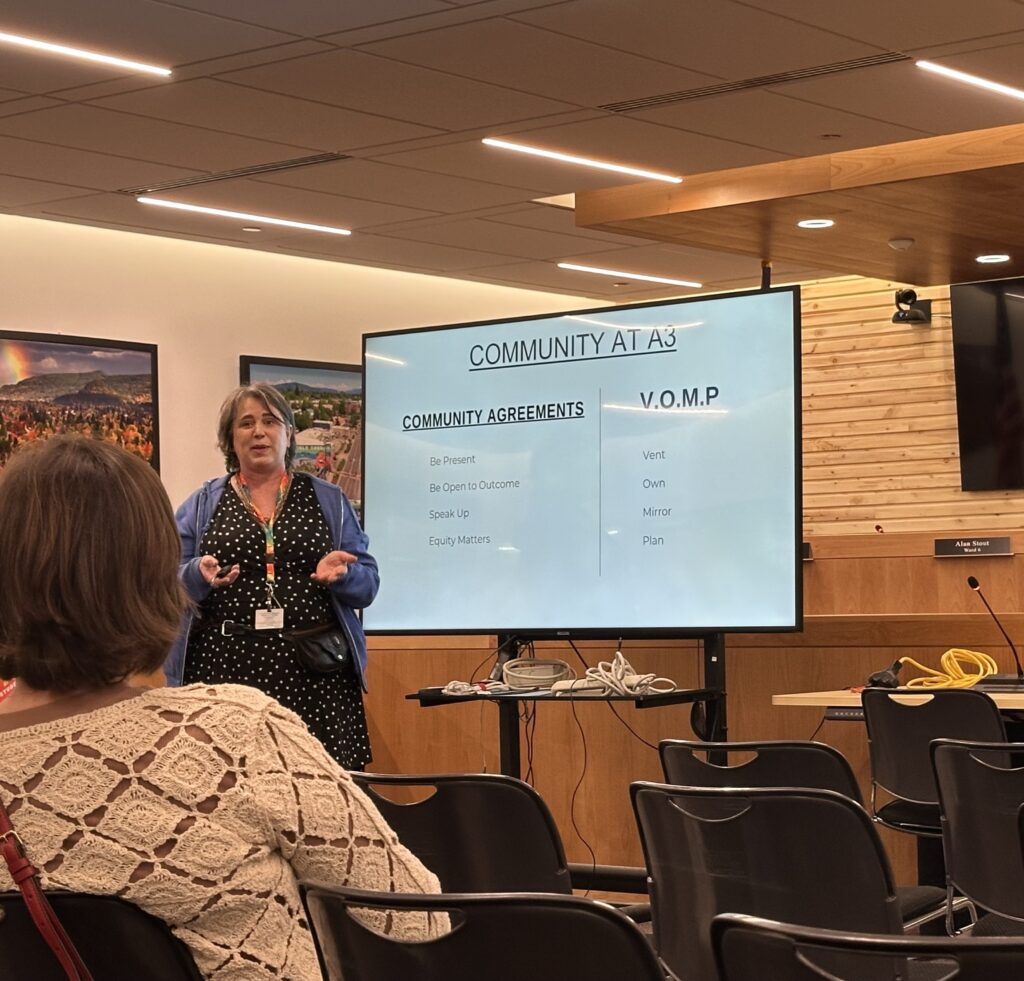
Academy of Arts and Academics (A3) principal Ame Beard was there to suggest solutions to address declining enrollment rates and curriculum issues the rest of the school district is facing. According to Beard, 50% of A3 students come from a district outside of Springfield, and there has not been a physical altercation at the school since she has been there. She said the high school has a 100% graduation rate.
“The interesting thing about A3 is it’s all teacher-developed curriculum,” she said.
Beard explained that art and project-based learning are intertwined in the curriculum, in all disciplines.
“Why that’s so important is that our students need to have real skills when they leave high school. Managing a project is something we expect our kids to be able to do when they leave,” Beard said. “We codify in every topic things that we know that our kids need, from soft skills to real skills that they need in the workplace or to go to college.”
She said A3 does not do standardized testing or quizzes in the typical curriculum; instead, students demonstrate their learning through exhibits. She gave an example of a chocolate class where students learn the history and literature of chocolate, then delve into the business side of operating a chocolate business, where they can practice entrepreneurship and showcase truffles they have made themselves.
Beard closed her presentation by discussing how to overcome conflict at the school. She shared a restorative justice model called “VOMP,” which stands for vent, own, mirror, and plan. Presenters questioned whether the SPS board would be open to duplicating A3’s model.
“Conflict is part of life, but overcoming conflict is not part of life. We are not taught to do that, so we do it by design,” she said.