A young Hispanic female teacher whose parents brought her to the United States as a child is forcibly taken from her classroom by ICE agents in front of her students.
The father of three enlisted Marines is dragged from his car and taken into ICE custody.
A female college student is detained at an airport while traveling home to see her parents. Within hours she was deported without a hearing or any due process. To a South American country she has no memory of ever living in.
In fact, between Jan. 20 and Oct. 15, 2025, immigration operations – which were purported by the president and top officials to focus on criminals such as murderers, rapists, and gang members – have instead resulted in the arrest of nearly 75,000 individuals without any criminal records.
Many of the arrests were over what is essentially a misdemeanor – lacking documentation to prove their status.
In a country of immigrants (unless you’re a Native American or an American of Mexican ancestry your ancestors all came from somewhere else) the punitive decision to me sounded excessively harsh for a misdemeanor, inflicted on people with a history of productivity.
But all Americans have an immigration story to tell.
My grandpa Manuel was a second-generation American of Mexican descent. Born at the turn of the 20th century, in a place that became Huntington Beach, Calif.
His father, Nicolas Gallegos, had moved to the Orange County coast from San Diego. He was a third-generation Californian, the first of my family to be born inside the United States as an American, after California became a state in 1850.
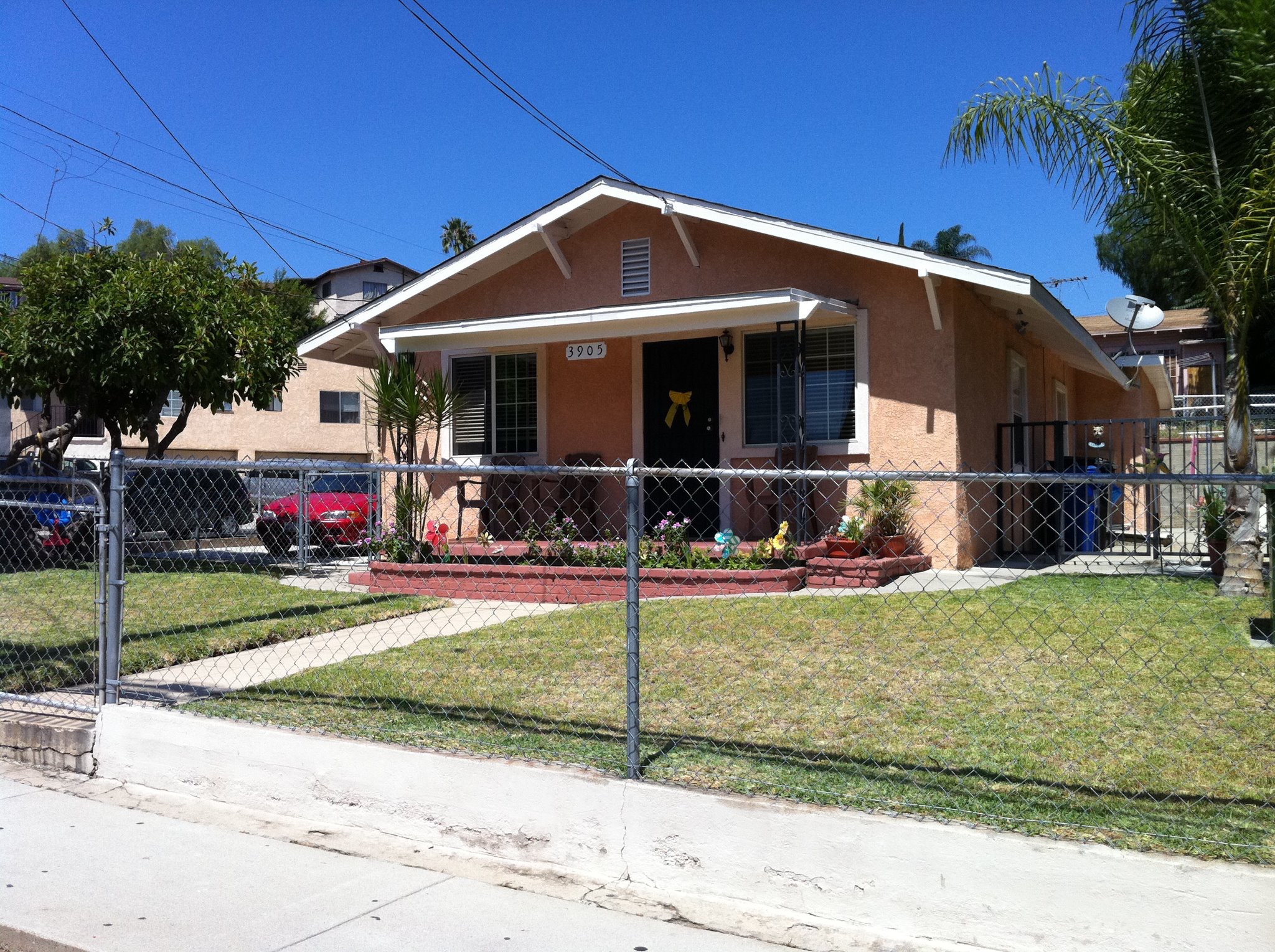
Grandpa moved his mother and his young bride Lupe to Los Angeles just before the Great Depression to make medical care more accessible to his mother. They settled into a little white house in a working-class neighborhood to the east of downtown Los Angeles. One of the hardest-working people I’ve ever known, grandpa Manuel found a job working for a refrigerator and stove manufacturer. Even through the Great Depression he was never unemployed. My mother and her two older brothers were born in the little white house and lived there until they all married.
The melting pot
The east-of-downtown neighborhood was integrated in those days; Anglos, Jews, old Mexican families like mine, and – prior to World War II – there were also a number of Japanese families. On several occasions my mother shared her vivid memories with me, including the day that all the Japanese families were rounded up by American military personnel and sent off to internment camps.
We now look back at that time and many Americans agree that it was one of the most shameful events in our country’s history. The claims of Japanese-Americans conspiring with the nation of Japan were found to be baseless. In retrospect, our government has said the Japanese-Americans who had been interned were loyal and patriotic Americans. The wrong was eventually righted by the Civil Liberties Act of 1988. It provided a $20,000 restitution to all surviving internees.
The east Los Angeles neighborhood began to change during the time of my Boomer generation. Many of the old families moved along, often replaced by newly arrived Mexican families. Grandpa was prosperous, built a duplex behind his home (I lived my early childhood in one) but over the years had no problem renting to the newcomers. He was bilingual and the newcomers were comfortable with him. Legal or undocumented, he didn’t care, and never asked … so long as you paid the rent and kept a clean apartment.
During his lifetime he also saw millions of other people immigrate to California from the eastern states and from all over the world. My father’s family came to California from Mexico, through Arizona in the 1920s. My grandfather Juan’s immigration application clearly stated that he had “walked” into the United States. My wife Tami’s family came from England through Ellis Island in about 1900. Eventually, they arrived in the northern San Joaquin Valley from Oklahoma in the 1930s. A “Grapes of Wrath” family like thousands of others they fled the dust bowl to also become “Californians.”
Like many Americans my family’s immigration story spans across centuries. We called it the “melting pot” – nationality is not black-and-white; it’s not that simple.
But it defines diversity, inclusion and acceptance and I was raised to believe it defines what it is to be an American.
Grandpa Manuel had a way of looking at the newcomers and old timers alike. “Even if your front yard is nothing but dirt, it needs to be clean dirt.” Meaning that even if you are dirt poor, you can be hard working and carry yourself with dignity … no matter where you were from or your status. You deserve to be treated with respect and thanked for what you add to the pot.
Frank Armendariz writes a regular fishing report for The Chronicle.