SPRINGFIELD – “Reliability and resiliency.”
It’s a veritable mantra among those working in the Springfield Utility Board’s Water Division.
And it makes sense, of course. Ensuring the highest-quality water – even during difficult times, or perhaps, especially during difficult times – is the top priority.
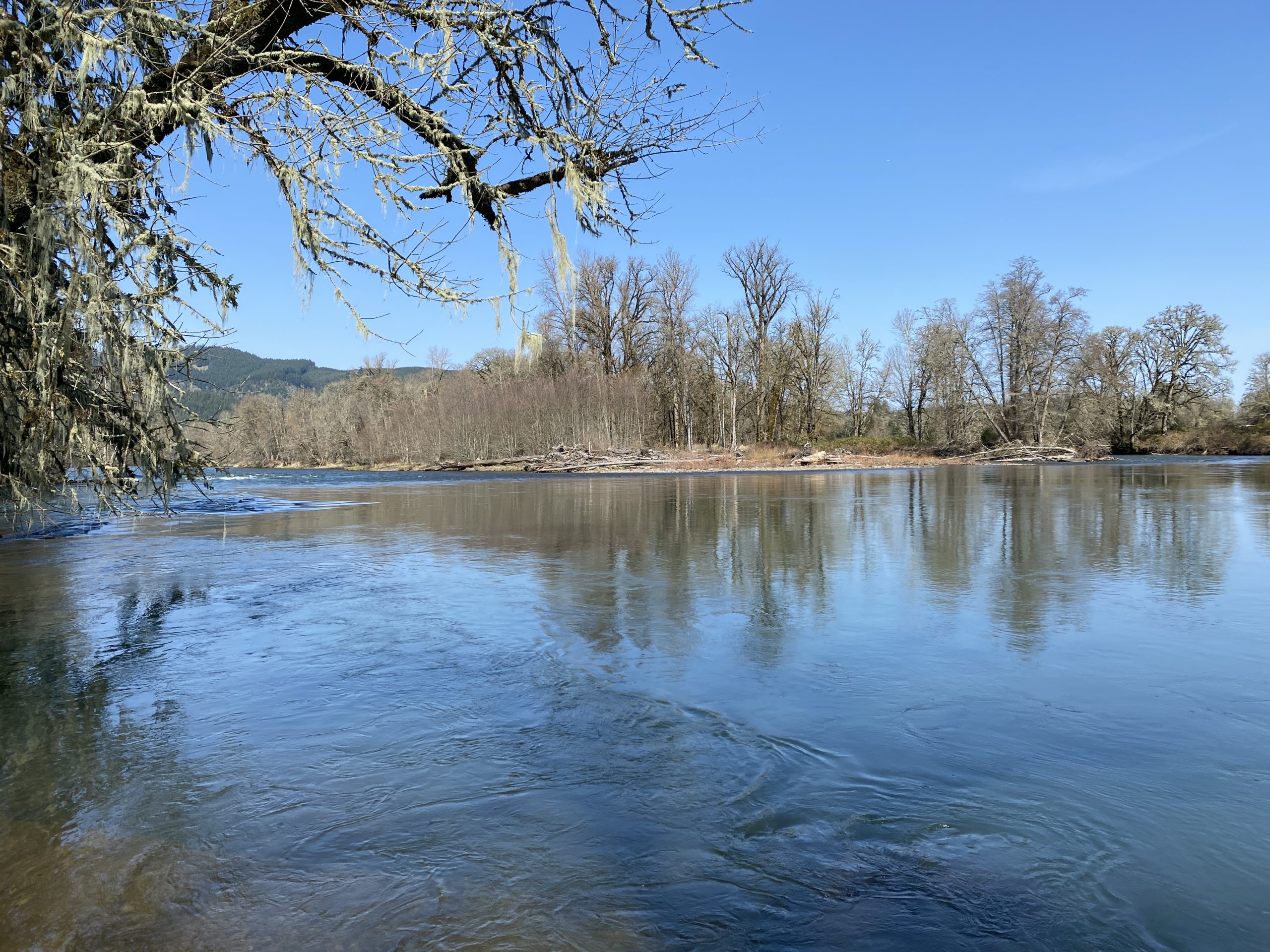
While SUB has tapped multiple water sources and blended multiple water systems in its 75-year history, it has all led to the McKenzie River project – an initiative that spans nearly three decades.
The project is still in the design and permitting stages with construction expected to begin in 2028 and the new facilities in operation in 2031.
A bit more than 10 years ago, SUB began the planning process for building a McKenzie River treatment plant in the Thurston area. Projections showed 48% growth in water demand the next 50 years. So characteristically, SUB initiated building the first phase of the necessary expansion before the need arrived.
Today, most of Springfield’s drinking water comes from groundwater sources. SUB also has a water treatment facility on the Middle Fork Willamette River that produces 6 million gallons per day. Once available, the new McKenzie River source will be able to meet Springfield’s future supply needs while adding needed system resiliency.
The project will be financed through a combination of water rates from customers, as well as long-term loans. SUB is also actively working to secure money from state and federal sources.
Long-term vision
More than 25 years ago, SUB leaders applied for and received water rights to the McKenzie River as it sought to add another water source. Thus an interruption or problem with any of SUB’s water sources could be covered by one or more of the others.
Part of resiliency hinges on moving water across the footprint of the SUB system so that, ideally, any area can be served from any source. SUB replaces about 4,000 feet of main transmission line yearly and has been doing so for the past 10 years. These are water lines of 20 inches and larger.
Additionally, SUB replaces about 2,000 to 3,000 feet of distribution lines (smaller than transmission lines) yearly in those hilly areas where soil movement damages the lines. As part of SUB’s proactive water line maintenance program it also tests one-third of Springfield every year using sensitive “listening” devices that can detect leaks.
Another aspect of resiliency is seen in the cooperation with adjoining water systems. Rainbow Water District and EWEB both have inter-ties with SUB so that if the need arises they can share water. Rainbow has an even more intimate water-sharing agreement with SUB, which came about when SUB began serving its customers that were within the Springfield City limits.
Part of that near-term work involves upgrading the inter-ties between the three water systems. Remote operation replaces manual operation of the inter-tie valves, which allows for a much faster response when the need arises.
Acquiring the necessary permits for the McKenzie River project involved applications, studies, and even plan modifications. Multiple agencies were involved, including the Army Corp of Engineers, Oregon Division of State Lands, National Marine Fisheries, Oregon Department of Fish and Wildlife, Oregon DEQ, Lane County Planning, City of Springfield Planning, to name just a few.
“The permitting process for the McKenzie River Water Supply Project has been thorough and all-encompassing, but our work with a consulting firm that deals with these sorts of processes has been fantastic,” said David Looney, a civil engineer in the water division. “We’ve had positive communications not only during, but in the build-up to the submission of the necessary permits for the project with partner agencies at all levels.”
Seamless evolution
You won’t notice a thing at your tap because SUB Water Division, like SUB electrical, strives to do its job so well you don’t notice them.
How does SUB treat the water from the McKenzie River? Years ago, before SUB built the slow sand filtration facility to treat water from the Middle Fork of the Willamette, it examined the treatment options available. It chose the slow sand filtration plant based upon the Willamette River’s water characteristics, the regulatory requirements, and operational needs.
It continues to evolve.
In light of changes in regulations, the very different characteristics of McKenzie River water, and today’s operational needs, the membrane/micro-filtration treatment system was chosen.
To verify the choice, SUB conducted a yearlong test using a portable membrane test unit. Making sure the chosen treatment system will work as expected in all seasonal conditions exemplifies SUB’s careful planning and execution. Proactive and careful.
Looking back
Many households enjoy water and electricity without much thought about what goes on behind the scenes to make those services available. Most of us have vague ideas of how electricity is stored and distributed and how water is treated – before and after usage.
SUB, best-known for its electricity management, has had an even more challenging role in providing safe drinking water for our various communities.
In a perfect world, a water system would be built by a single agency from the ground up (pun allowed). It runs as a unified whole. Every piece designed to operate within the system.
SUB had no such luxury.
Its water system is a complex matrix, created from a series of previously independently constructed and operated facilities. The task, for SUB engineers, was getting all of these disparate parts working together.
Over decades, SUB engineers merged six distinct systems into one robust water utility to serve Springfield.
Complexity, it seems, is just another day at the office for the folks in the SUB Water Department.
This all began in 1906 when a charter was granted by the City of Springfield, through Ordinance 72, that allowed the Oregon Water Company to provide water to downtown Springfield. OWC was a private company.
Water was taken from the Mill Race – a stream in the southernmost region of the Willamette Valley – and pumped in piping down Main Street to 7th Street, and served an area 2-3 blocks wide. The water pump for the system was housed in the electrical generating plant, and used steam to operate the water pumps. The power-generating plant had been in operation since 1903, after the Booth-Kelly Mill was built in 1902.
Booth-Kelly supplied hog fuel – a coarse mixture of unprocessed wood residue, including bark, chips, and sawdust – made it possible to fuel the boilers to make steam to operate the power generators and the water pump.
The Booth-Kelly Mill burned down in 1911, interrupting the supply of hog fuel. The power plant was rebuilt along with the Booth-Kelly Mill.
Eugene Water & Electric Board (EWEB) was created in part due to this interruption in power. Those communities also were dealing with a typhoid outbreak at the time.
As EWEB developed its power and water systems, it did so by constructing it as a single entity. That year, Main Street in Springfield was paved. Momentum was building.
Pacific Power and Light (PP&L) purchased both Oregon Power and Oregon Water in 1915, and began serving power and water to customers in Springfield.
By 1936 the Mill Race water was deemed too “dirty” and an intake was created some 500 feet east of 28th Street to get above the sources of dirty water. This was about a mile from the pumping station at the power plant. A 16-inch wooden stave pipe was used to move water to the power/water pumping station from the intake. Chlorine was added to the water for the first time at 28th Street.
PP&L decided in 1950 to stop use of the Mill Race as a water source and began to develop the Willamette Well Field. Later, SUB developed a system with direct capture of water from the Middle Fork of the Willamette River.
Subsequently, the Willamette River water flowed through slow sand filters, mixed with water from the wells, chlorine was added, and then the water was distributed to the city.
SUB takes over
From 1915 until 1950, when the citizens of Springfield voted to form a publicly owned utility, a number of water systems had been formed in and around Springfield.
- PP&L in the City of Springfield;
- Willamette Water District in south Springfield;
- Filbert Grove Water District out by Dorris Ranch;
- Glenwood Water District;
- Rainbow Water District in the area north and northeast of Springfield;
- McKenzie Highway Water District in the East Springfield/Thurston area;
- And portions of the Oakway Water District, which got its water from EWEB out in the Gateway area.
Each of these water districts had its own water sources, piping systems and storage systems – commonly those big green tanks resting on the hills around Springfield. And because the storage tanks were set at different elevations with each water district, they had different operating pressures.
The task: Get those different operating pressure systems to play nice together, when the piping was not originally built for playing nice.
The Rainbow Water District was the only one of these water districts or companies to not become part of SUB directly. Still operating by way of an Inter-Governmental Agreement (IGA), Rainbow and SUB share inter-ties and water exchange agreements.
However, due to the direct ties between Rainbow and SUB, systems, operations, and infrastructure must be coordinated. And therein lies the complexity of the entire SUB water system.
Each of the independent water districts that have become part of, or are inter-tied with SUB, operated independently and uniquely.
Rather than building and expanding a unified system where everything is designed to meet a general operating standard (what EWEB was able to do, for example), SUB was required to incorporate parts of seven different operating systems and standards into a single system that could continue to meet people’s need for clean water, and yet keep the system resilient with regard to breakages, and the need to repair, replace, and upgrade with minimal interruptions.
It’s just not feasible to redo 300-plus miles of pipe and all the storage tanks into a single unified system.
So, SUB had to combine its 24 owned wells, take water from Rainbow’s eight wells, and the three jointly-owned wells with Rainbow. Plus, the Willamette Surface water source.
Yet with a willingness to engineer and be flexible in their operations, SUB has managed to make this “complex” system operate smoothly, efficiently, and in such a way the customers have no idea how amazing the operation truly is.
It all comes back to reliability and resiliency.
To that end, residents play an important role, too. SUB has developed “Time of Travel” maps that let it know how fast a potential contaminant can reach a well. What are potential contaminants and what can residents and businesses do to help maintain Springfield’s excellent water quality? One place to learn more about both? Residents can learn more about their role and SUB’s Drinking Water Protection Plan here:
subutil.com/water/drinking-water-protection/
Ralph Christensen is a former hydrogeologist for Lane County and wrote this for The Chronicle.