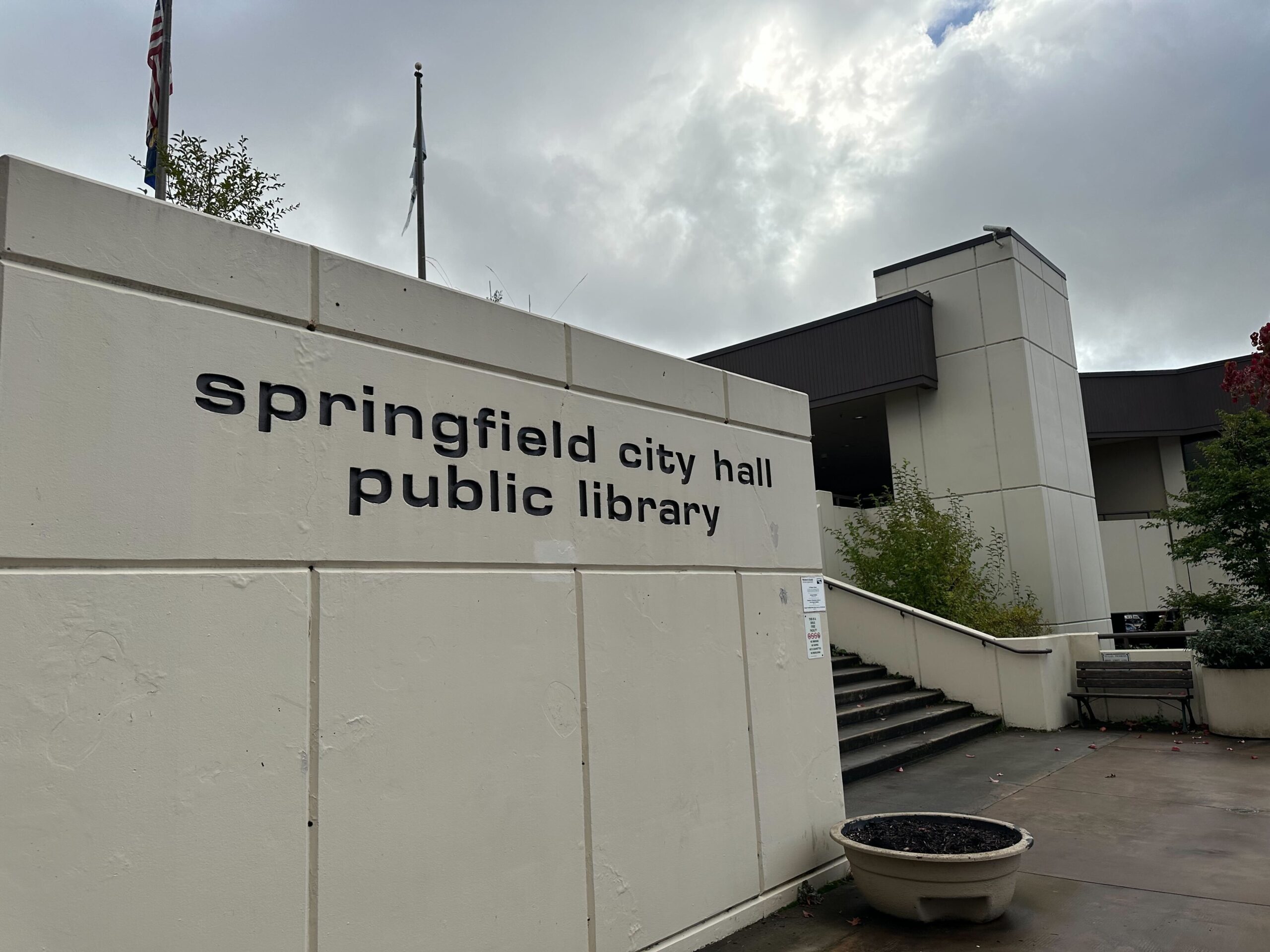
SPRINGFIELD – The Springfield City Council is continuing the conversation around a .1% payroll tax as one component of a broader effort to address the City’s long-term General Fund imbalance.
Finance director Nathan Bell at the April 20 meeting noted that the payroll tax ordinance closely aligns with the Fiscal Stability Task Force recommendations by using the lowest possible rate to generate approximately $2.45 million in the first year of implementation. He also said the rate would be established by a council-adopted ordinance, which means it can only be changed by another council-adopted ordinance. There would be no rate increases for at least three years.
If adopted, the tax would be shared by both employers and employees, with employers paying 0.1% of wages paid to employees and employees paying 0.1% of wages earned.
“I’m here because many residents and employers are concerned that the task force’s recommendations of a new payroll tax move Springfield in the wrong direction at a moment when our economic foundation is already fragile,” said Steven Schmunk, vice chair of the City’s planning commission. “A payroll tax does not address structural drivers. It simply shifts the burden on employers and workers who are already under pressure.”
Schmunk suggested the city evaluate public programs like the library and let voters decide if a library levy would be supported rather than a payroll tax.
“Many employers feel that the policy environment has become increasingly difficult for commerce and job creation, and we are seeing that job creators and working families are leaving Oregon, and adding to a local payroll task risks accelerating that trend. Attacks on wages send the wrong signal at a time when Springfield needs to retain and attract jobs. For these reasons, I urge the council to reject the payroll tax recommendation. Springfield taxpayers don’t need another tax on employers and families struggling in the Oregon economy.”
Libby Smith, co-owner of Roberts Supply Co. and the wife of Creswell Mayor Nick Smith, shared how the tax would affect her business.
“My husband and I are raising three young children. I can say personally that every dollar counts, especially to those of us trying to raise children or who have dependents,” Smith said.
Smith discussed how reductions in school enrichment activities and programs have affected her family’s expenses.
“These dollars that you’re considering taking from us are the ones that allow us to pay for music lessons, dance classes, or to put our kids in sports programs or send them to summer camp, or for someone to help pay for their dependent care,” she said. “This will hurt us all. Any extra money you take can be the difference in someone affording to remain independent or needing assistance. Your vote to pass this tax could be making people choose between healthcare or simply paying their bills.”
Smith also suggested the councilors take a deeper look at where cuts can be made so the payroll tax would not need to be imposed.
“The Public Library is not a necessity. Schools have libraries, and the majority of people are more concerned with access to the internet than access to the public library. Reduce operational hours if necessary. Consider making the library or Willamalane a predominantly volunteer program wherever possible,” she said. “Extracurriculars are not necessities. Being able to afford a roof over your head, healthy food, and medical bills are necessities.”
Other folks were not entirely opposed to the idea of the tax, but suggested it be a more flexible rate.
“It is absolutely necessary that we utilize this revenue stream to keep our city running. Furthermore, .1% is simply not sufficient,” said Springfield resident Ky Fireside. “In the past 10 years, more businesses have opened than closed in the state of Oregon. We are not unfriendly towards business. We need this income, and the three-year stagnation is absolutely ridiculous. The economy is so unpredictable that you cannot tie your hands for the next three years.”
Four other commenters agreed that .1% would not be a sustainable rate. Beth Halverson, a clinical supervisor at Shine Counseling, suggested different rates based on a business’s income.
“I absolutely believe that higher-earning people should be able to shoulder more of that expense than some of the younger families or some of the people that don’t have the same privilege afforded to them,” Halverson said.
Paige Walters, senior director of advocacy and economic development for the Springfield Area Chamber of Commerce, spoke on the Chamber’s behalf.
“The chamber does support the ordinance as it’s drafted in December,” Walters said. “Our support, however, is grounded in one key condition. It must be paired with a sustained focus on long-term economic growth. Payroll tax can help address immediate fiscal needs, but it’s not a long-term solution. A city that can fund essential services is critical, but the level at which we set this tax will directly shape our economic competitiveness. That’s why maintaining a measured approach, including the current rate, matters.”
Since this was a first reading, the council took no action other than considering public comments. Springfield Budget Committee meetings are scheduled for May 4-6 at 5:30 p.m. at the Springfield Justice Center, and will also be available virtually by Zoom.