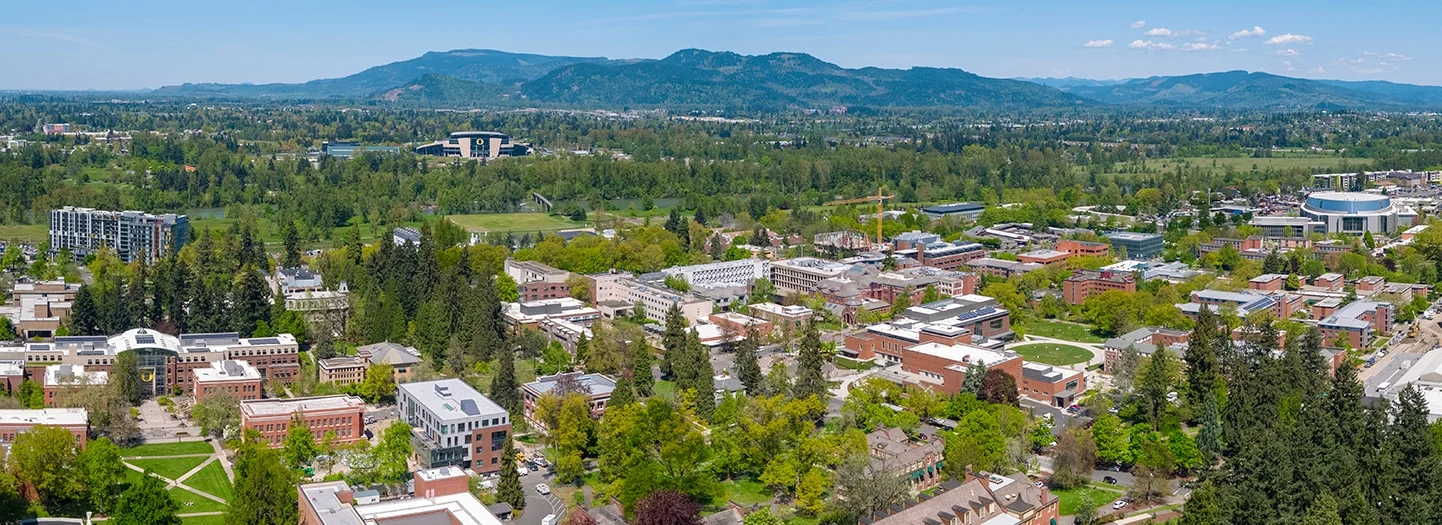
The University of Oregon football program reigns supreme in our community. Each year, the hopes of an entire region and state rest with 85 young men battling for supremacy in college and struggling for the holy grail – a national championship. But its next “Natty” would be the Ducks’ first in their storied history.
Well, on that same campus another team, often operating in obscurity, has already secured multiple national championships. It’s the U of O Debate team.
And sure, it’s impossible to get 50,000 screaming fans to attend a college debate, but the point remains. In an academic institution, academic pursuits should be celebrated and supported.
That’s why it’s rather alarming that during this latest round of budget cuts, the Oregon administration has decided to shutter the entire forensics department, which includes the legendary debate and mock trial teams.
On a recent show, I talked with both the head professor of Forensics and two students, from both debate and mock trial.
Trond Jacobsen, who was the head of the forensics program, told me about its lengthy and historic legacy. “Forensics has played a bigger role at the University of Oregon than it has at any other public university,” he said. “We’ve had six national championships. And in fact, in the early 1890s sorry, late 1890s and early 1900s, forensics activities on campus were so popular that they made money selling tickets, and used some of those proceeds to help subsidize travel for the football team in its early years!”
Jacobsen also explained the proud history of Forensics on campus and said that the University of Oregon participated in one of the first intercollegiate debates against Albany college in the 1890s; participated in the first radio debate involving the University of California, Berkeley and the University of Oregon, and more than 2,500 people purchased tickets to watch Oregon beat the University of Oxford on the Eugene campus back in 1924.
Debate student Lorelei Sassenfeld stated that Forensics is a poster child for the University’s expressed goal of academic rigor. “The university’s mission statement believes that as a community of scholars, we’re supposed to help individuals question critically, think logically, reason effectively, and communicate clearly, all of which are main tenets of debate and mock trial,” she said.
Additionally, Sassenfeld explained that debate, mock trial, and forensics as a whole, has historically served as a large space for underrepresented communities.
Using football again as a comparison, Forensics, like its more famous activity, brings highly skilled and talented students to campus and helps grow the overall importance and status of the university. Just like a great quarterback adds to the overall prestige of Oregon, a smart kid with a thirst for verbal and mental battle improves the overall student body.
A participant in a mock trial said it best when I talked to him. “If Oregon didn’t have a mock trial team, I can say I definitely would not have come here,” said student Dylan Kussman-Carter.
I understand that budget cuts are hard and that by its nature, often zero sum. If Forensics doesn’t get cut, something else must. But it seems to me that such a historic program, that according to Jacobsen, costs the University a relatively small amount, can be saved.
And if you think, this is just a case where a professor is trying to save his job, Jacobson told me that, “my hope is that Forensics is overseen by a dedicated, passionate forensics professional, perhaps not me, but somebody like me who cares to help build the program.”
Jacobsen, Sassenfeld and Kussman-Carter, all believe the program can be saved.
“All it requires is for the university to conclude, we think reasonably, that forensics is worth preserving in the form that it has enjoyed for decades,” they said in unison.
Michael Dunne is a regular contributor to The Chronicle.