CRESWELL – Like most surrounding cities, Creswell has begun weighing the benefits and drawbacks of Flock cameras.
The cameras are used to record license plates and can be upgraded for facial recognition, and have been touted as a crime-fighting tool by police.
But the mayor, city councilors, and residents have raised concerns about privacy, cost, and accountability.
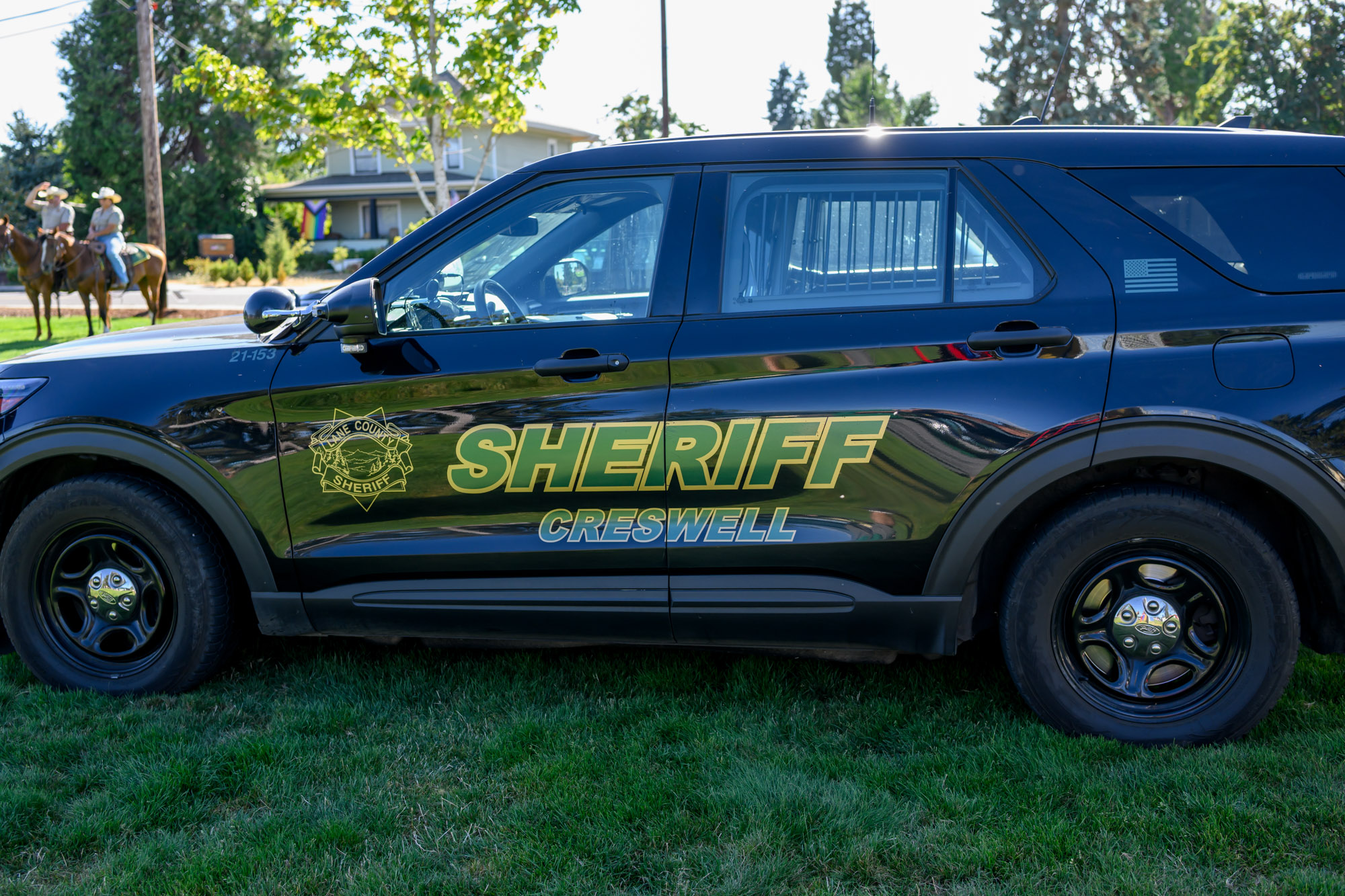
Lane County Sheriff’s Office (LCSO) Creswell Sergeant Alex Speldrich addressed council concerns on Monday, Oct. 13, regarding the department’s usage of the cameras. Citing a recent example of success through usage, Speldrich said that LCSO has used Flock camera data to assist in investigations, including the double Banner Bank robberies in Creswell and Cottage Grove on Sept. 9.
“We used the Eugene flock cameras to locate (the vehicle in the robbery)… It narrowed the search greatly,” Speldrich said, noting that the cameras are primarily used for major crimes and missing persons, not for minor infractions.
Resident Scott Lemons voiced strong opposition, citing the high annual costs – around $3,000 per camera plus installation and maintenance – and the risk of outsourcing surveillance while retaining local liability.
“Cameras sound like a convenient crime-viewing tool, but when you look past the sales pitch, they represent high cost, high risk, and low accountability,” Lemons said, warning that the cameras could expand surveillance and erode local control over residents’ data.
“We’re outsourcing that technology, but keeping the liability. That’s bad business and bad governance,” Lemons said, noting how even the larger cities are pulling back on the use and implementation of the cameras.
Different cities, similar concerns
After public outcry, the Eugene City Council on Monday, Oct. 13, voted to put a pause on the use of the city’s Flock cameras. Sarah Medary, the city manager of Eugene, said she has decided to turn the cameras off on Tuesday, Oct. 14, and plans to host a work session as early as November to discuss a path forward.
Meanwhile, the Springfield City Council has been addressing concerns about its technology, as Springfield residents have dominated the public comment period on this subject over the course of several meetings.
The Springfield Police Department installed 25 Flock cameras at major entry and exit points around the city on Sept. 26, sparking a resident outcry when the cameras were temporarily turned on without public notice.
SPD soon thereafter released a statement explaining that the cameras were installed to meet the funding deadline and have yet to be activated, and that, during the installation process, they were briefly turned on for calibration. Once each camera has been verified, it will be deactivated “until a broader community discussion takes place,” according to the release.
The Springfield City Council plans to discuss potential paths forward at an Oct. 20 work session.
Current state in Creswell
Speldrich said that, currently, no Flock cameras have been installed in Creswell.
“We’re holding off on that until we decide if that’s a good fit,” Speldrich said. “There are three (cameras) that are dedicated to Creswell that the sheriff’s office is paying for, but they have not been hung up. … So it’s a possibility to put them up in Creswell. Ultimately, if the City doesn’t want the Flock cameras, then the City’s going to miss out on the Flock cameras and the crime that it prevents.”
Speldrich said that residents do have a voice in the matter.
LCSO “isn’t going to put the cameras up somewhere where people don’t want them,” Speldrich said. “If the City decides that it doesn’t want them within the city limits, we’re going to respect them.”
Mayor Nick Smith said that he sat down with Speldrich and city manager Vincent Martorello to receive a tutorial on the cameras for a better understanding ahead of the meeting. The discussion focused on presenting an ordinance to the council and the public, potentially followed by a memorandum of agreement regarding placement outside city limits.
This would ensure effectiveness near Highway 99 and the freeway, Smith explained. The decision was made to bring this matter to a public meeting.
“I believe it is a good tool for the sheriff’s office. I believe the intentions of (the cameras) are good, but the road to hell is paved with good intentions,” Smith said, citing general distrust in the government.
Councilor Staci Holt cited her own concerns.
“The way that things have been in our culture, the last couple of years, we’ve seen a lot of discourse between, let’s say, the two political parties, where they have utilized information to go after each other,” Holt said. “I know we’re a small town in Oregon, but I don’t want to put us in a position that opens the door for tools to be used against us, and I feel like that’s where we’re headed with something like this.”
Though three cameras are dedicated to the City of Creswell and paid for by the LCSO, Speldrich emphasized that the decision to install them within city limits remains with the city council and the community.
“The long and short of it is, whether the cameras are in Creswell or not, they’re still going to be utilized by the sheriff’s office,” Speldrich said. “They’re a great tool. They’re a great investigative tool. There are several cases I could really talk about in just the last month where they would have honestly solved our cases, or at least made it super easy to follow through and take people into custody and stuff like that. But if they’re not wanted here, they’ll be put somewhere else, and that’s something that that community will benefit from.”
To address ongoing questions and concerns, Martorello said, “This conversation might be appropriate for a work session where a tutorial could be given and the public can see it as well.” He suggested inviting representatives from LCSO to encourage “an in-depth back and forth, and at that point, (the decision) may become a little bit clearer. And then we can also discuss in more detail the memorandum of agreement that we were talking about.”
Creswell City Council’s next work session is slated for Monday, Oct. 27, where public comment will not be taken. It will meet again in a regular session, which allows room for public comment, on Nov. 11. Both meetings are held at 6 p.m. at the Creswell City Hall, 13 S. 1st St.